

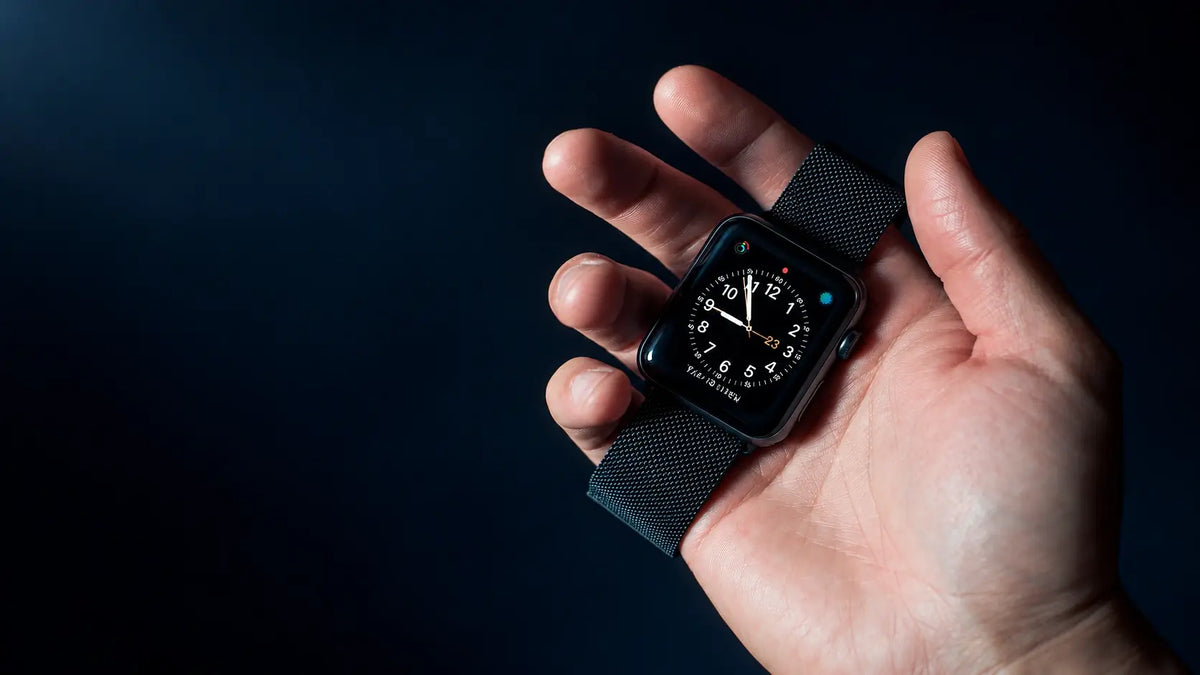
- Can a Milanese Loop Scratch an Apple Watch?
- When Is a Milanese Loop Most Likely to Scratch Your Watch?
- Do Watch Materials and Milanese Loop Finishes Change the Scratch Risk?
- Does the Milanese Loop Itself Scratch or Show Wear Over Time?
- How to Prevent Scratches When Wearing and Handling a Milanese Loop
- What Should You Do if Your Apple Watch Is Already Scratched?
A Milanese Loop can scratch an Apple Watch, but everyday wear doesn't necessarily mean your watch will get scratched. The risk depends on how the metal band comes into contact with the watch and the surfaces involved.
If you're considering a Milanese Loop or have already noticed a mark on your Apple Watch, here's what you need to know about potential scratches, how to prevent them, and what to do if they appear.

Can a Milanese Loop Scratch an Apple Watch?
Yes, a Milanese Loop can scratch an Apple Watch if its metal mesh rubs against the watch's surface. That doesn't mean scratches are inevitable.
A traditional Milanese Loop is made from woven metal mesh that bends and folds. When the loose band touches the watch case, screen, or back crystal, friction can leave marks. Whether that contact causes visible scratches depends on the materials, finishes, and conditions of contact.
Owners have reported different experiences. In a MacRumors discussion about the silver Milanese Loop, some users reported no scratches, while others warned about the band touching the watch during removal or storage. These are individual accounts, not controlled scratch tests.
The key distinction is between wearing the band and letting its metal surfaces rub against the watch.
When Is a Milanese Loop Most Likely to Scratch Your Watch?
The situations to watch for are those where the metal band can move against the watch itself, especially when you're taking it off or setting it down.
The band doesn't have to be damaged for this to happen. Its flexible mesh can fold back toward the case, while a loosened magnetic closure may let parts of the band shift during handling.

| Situation | What May Happen | Practical Precaution |
|---|---|---|
| Normal wear | A properly fitted band generally stays in place around the wrist, limiting loose contact with the watch case. | Keep the band properly fitted and check for unwanted contact. |
| Taking the watch off | The loose mesh or magnetic closure may fold against the case or back crystal. | Hold the loose band away from the watch as you remove it. |
| Setting the watch down | The metal mesh can curl underneath or rest against exposed watch surfaces. | Position the band so it doesn't press against the case or screen. |
| Storage and travel | The watch and band may shift against each other or nearby objects. | Store the watch where the band and other hard objects won't rub against it. |
These are situations where contact could occur, not a tested ranking of scratch risks.
Does a Clasp-Free Milanese Loop Make a Difference?
Not every Milanese-style band uses a magnetic closure.
Eclipex One Flex, for example, is a continuous loop of woven 316 stainless steel with no clasp, buckle, or magnet. Instead of opening a magnetic closure, you stretch the loop over your hand to put it on or take it off.
That changes how you handle the band, but it doesn't eliminate metal-to-watch contact or establish that One Flex is more scratch-resistant than a traditional Milanese Loop.
Do Watch Materials and Milanese Loop Finishes Change the Scratch Risk?
Yes, but the metal alone doesn't tell you whether a Milanese Loop will scratch your Apple Watch. The watch's surface finish, the band's construction, and how they come into contact all matter.
Apple Watches can have different case materials and finishes, while two nearly identical-looking bands may have different surface treatments. A scratch reported with one combination won't necessarily occur with another.
Aluminum, Stainless Steel, and Titanium Cases
Apple has used aluminum, stainless steel, and titanium across different Apple Watch generations. Each metal has its own properties, but how a case looks and holds up to visible wear also depends on its finish.
For example, Apple Watch Series 10 introduced polished titanium cases alongside aluminum models, including polished Jet Black aluminum and brushed Silver aluminum. Apple's Series 10 announcement describes these finishes.
It's tempting to assume that titanium must resist scratches better than stainless steel, or that a steel band will necessarily scratch an aluminum case. Neither conclusion is reliable on its own.
Without testing a specific band against a specific watch finish, there's no sound basis for ranking every combination by scratch risk. While comparing titanium and stainless steel watch bands highlights differences in hardness, it still doesn't tell the whole story of how a finished watch surface responds to contact.

Silver, Black, and Graphite Milanese Loops
Color brings another factor into play: the treatment applied to the metal surface.
Apple's stainless steel Milanese Loop uses an additional physical vapor deposition (PVD) layer for its finish. But PVD alone doesn't tell you how scratch-resistant a particular band will be.
Older Black and Graphite Milanese Loops have prompted discussions about scratching, including concerns over different coatings. Those reports apply to the versions being discussed, not necessarily every dark-colored Milanese Loop.
Rather than assuming silver, black, or titanium is the safer choice, look at the specific band, the watch's finish, and what evidence exists for that combination.
Does the Milanese Loop Itself Scratch or Show Wear Over Time?
Yes. A Milanese Loop can show signs of wear over time even when its metal mesh is still intact. The distinction to make is between cosmetic marks and actual damage to the band.
Fine scratches can develop on exposed metal surfaces, including the closure and areas that regularly touch desks or other objects. Depending on the finish, these marks may stand out more under direct light or against the original color.
On coated bands, a visible change may affect the surface treatment rather than the metal underneath. Polished and brushed finishes can also show marks differently, though appearance alone won't tell you how deep a scratch is.
The woven mesh itself is made up of interconnected metal strands, not a single solid piece. A superficial mark on the mesh is different from a broken strand, a distorted section of the weave, or a damaged closure.
Minor cosmetic wear doesn't necessarily mean the band is failing. Visible deformation or damaged components, however, deserve closer attention.
Without comparable long-term wear tests, there's no reliable basis for claiming that one Milanese Loop color or finish will consistently look better after months or years of use.
How to Prevent Scratches When Wearing and Handling a Milanese Loop
A few simple habits can help keep the metal band from rubbing unnecessarily against your Apple Watch.
1. Control the band when taking off your watch. If your Milanese Loop has a magnetic closure, hold the loosened mesh as you remove the watch. Don't let it swing or fold against the case, screen, or back crystal.
2. Keep the band clear when setting your watch down. Choose a clean, soft surface and make sure the metal mesh isn't pressed against the watch.
3. Store your watch away from hard objects. When traveling, use a soft compartment or protective pouch instead of leaving it loose with keys, jewelry, or other metal accessories.
4. Remove debris before wiping. If you see sand, dust, or other particles around the mesh or case, remove them carefully rather than rubbing them across the surface.
5. Use the right cleaning materials. Apple recommends a nonabrasive, lint-free cloth for Apple Watch surfaces, lightly dampened with fresh water if needed. Follow Apple's cleaning instructions for Apple-branded bands and the manufacturer's guidance for third-party bands. Avoid abrasive cleaners and polishing compounds.
These steps won't make a Milanese Loop scratch-proof. They can, however, reduce unnecessary friction and help keep debris from contributing to visible wear.
What Should You Do if Your Apple Watch Is Already Scratched?

If you've noticed a mark on your Apple Watch after wearing a Milanese Loop, don't assume the band caused permanent damage. First, take a closer look.
Check where the mark is. Is it on the screen, metal case, or back crystal? Think about whether the band could have touched that area, but keep in mind that the location alone doesn't prove what caused it.
Next, gently clean the affected surface with a nonabrasive, lint-free cloth, lightly dampened with fresh water if needed, following Apple's cleaning guidance. Dry the area and check it again under normal lighting.
What looks like a scratch may turn out to be removable residue. If the mark remains after cleaning, though, rubbing harder isn't necessarily going to help.
Don't try to polish it away with toothpaste, metal polish, abrasive paste, or other DIY treatments. Apple advises against abrasive polishing or buffing because these methods can affect the watch's finish.
If you notice a crack, damaged coating, an uneven surface, or a problem with how the watch works, contact Apple Support for an assessment. Not every mark can be safely removed.
A Milanese Loop can still be a practical everyday band, even if scratches are a concern. What matters most is knowing how your particular band comes into contact with the watch, avoiding unnecessary friction, and recognizing when a mark needs more than a simple cleaning.
One Less. One Flex.
The Next-Gen Milanese Solo Loop
Shop One FlexShare:
Apple Watch Band Sizes for Small Wrists: A Fit Guide
40mm vs 41mm vs 42mm Apple Watch Bands: Do They Fit?