

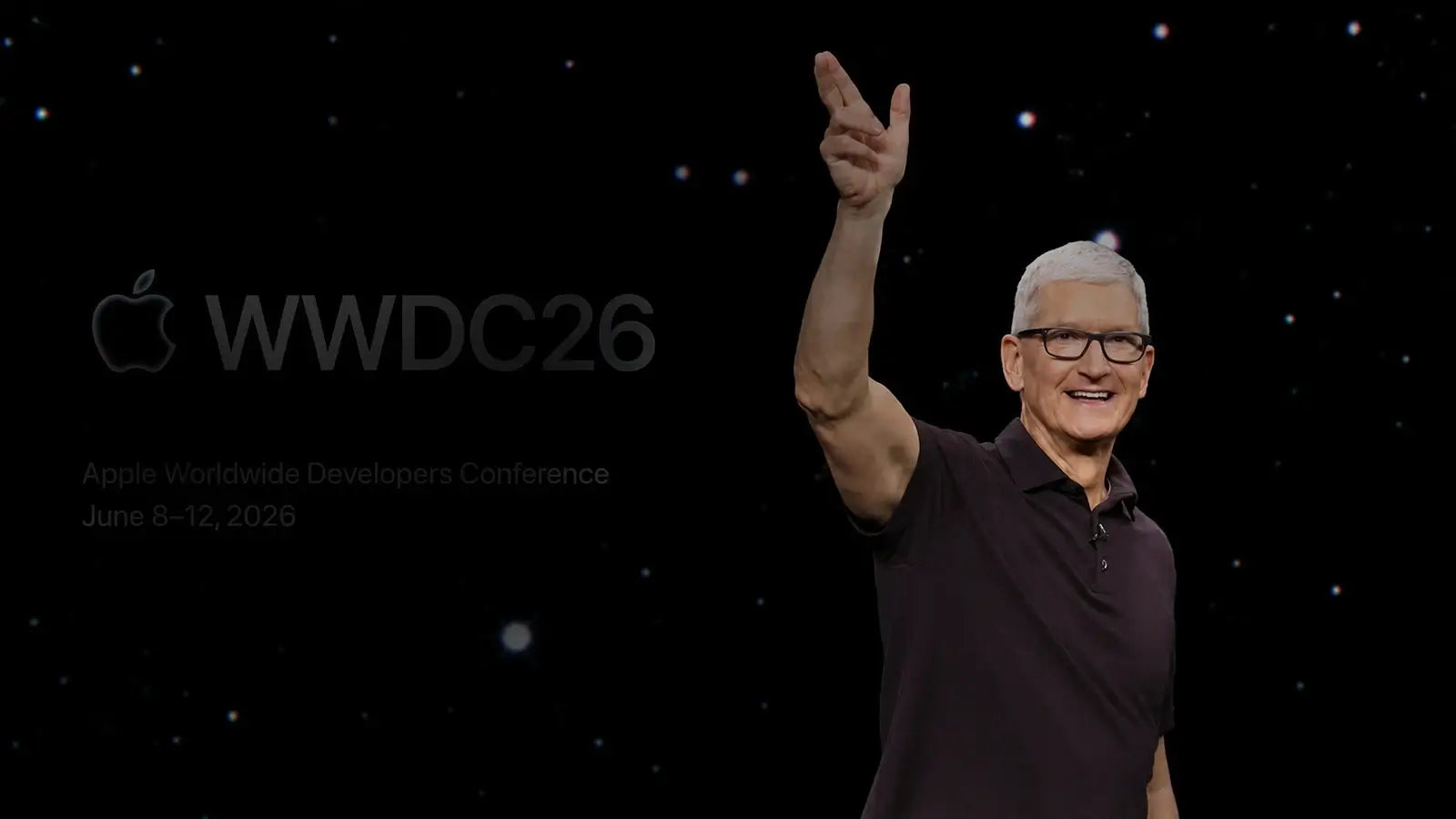
WWDC 2026 Overview
WWDC 2026 recap provides a structured overview of Apple’s latest platform updates announced at WWDC 2026, focusing on system-level changes rather than deep technical interpretation.
- WWDC 2026 highlights include updates across iOS, iPadOS, and macOS interface behavior and system tools
- Apple Intelligence WWDC 2026 introduces expanded on-device and cloud-assisted features across supported devices
- Developers receive updated APIs and system frameworks designed for tighter ecosystem integration
In daily use, these changes may affect how users interact with notifications, apps, and cross-device workflows during commuting, desk work, or travel, with smoother transitions between iPhone, Mac, and iPad. However, rollout is not uniform across all devices, and some features depend on hardware compatibility and regional availability, meaning the experience may vary depending on model and update timing.
Apple Intelligence as a System-Level Shift
Apple Intelligence WWDC 2026 shifts Apple devices toward a shared system-level intelligence layer. It connects everyday actions across iPhone, iPad, and Mac.
The Apple AI platform shift works through a mix of on-device AI and cloud processing. Simple tasks run directly on the device for speed, such as rewriting a message or finding a photo. More complex requests move to the cloud, like summarizing long emails or pulling travel details from different apps. A user might search for a specific meeting note while replying to messages during a commute, with results appearing in one flow.
what is Apple Intelligence depends on device hardware, especially newer chips built for AI tasks. Some features are limited on older models, and rollout can differ by region and update timing.

Siri AI Changes in Real Use
Siri AI update WWDC 2026 focuses on how Siri handles context in daily tasks. Instead of single commands, Siri improvements WWDC 2026 show better awareness of what the user is doing across apps.
Siri now uses Apple Siri contextual AI to connect actions across messages, calendar, and email. During office work or a commute, it can continue a task while the user switches apps. Replies feel more linked to recent activity instead of isolated prompts.
In real use, behavior changes show up in small ways:
- follows follow-up questions with less repetition
- connects actions across apps more smoothly
- handles multitasking with fewer clarification steps
- keeps short-term context during interruptions
Performance is still not fully stable across all devices. Older hardware and some apps show weaker context handling. Results can also vary based on system load and app support.

iOS and macOS AI Integration
Apple ecosystem AI links iOS, macOS AI integration, and iPadOS through a shared context system. Tasks move between devices without losing progress.
| System | AI Role in Use |
|---|---|
| iOS AI features WWDC 2026 | Handles quick actions like messages, search, and notifications |
| macOS AI integration | Supports longer tasks like writing and email work |
| iPadOS | Bridges mobile and desktop-style workflows |
A user might start replying to an email on iPhone during travel and continue on a Mac at the office. The content stays consistent, and the system keeps the same context across devices.
This works through shared context syncing across Apple devices. It relies on device-level continuity and account-based linking. However, feature availability is not identical across all hardware. Older devices may miss parts of macOS AI integration or iOS AI features WWDC 2026 depending on update support.
First-Hand Experience at WWDC 2026
WWDC 2026 experience felt organized and carefully staged from the start of the keynote. The WWDC 2026 first hand setting combined live talks with planned demos, where each feature ran under controlled conditions. The room stayed focused, especially during Apple Intelligence and Siri updates shown across iPhone and Mac.
The WWDC 2026 inside look highlighted smooth switching between devices during presentations. iPhone, iPad, and Mac were used in a consistent flow, showing Apple ecosystem AI behavior in a clear but guided way.
Most impressions came from watching repeated demo sequences rather than natural daily use. That matters because controlled setups avoid delays, errors, and unsupported cases. It showed how the system works in ideal conditions, but not how it behaves in less predictable real-world situations.

Apple Intelligence Limitations
Apple Intelligence limitations are still visible in everyday use across devices. Apple Intelligence WWDC 2026 improves system behavior, but consistency is not fully stable.
- Siri limitations appear in longer or mixed tasks, where context can drop when switching apps quickly. This shows up during busy work or travel use.
- Device limits affect performance, since newer chips run features better than older models. This creates uneven iOS AI features WWDC 2026 across devices.
- WWDC 2026 analysis shows staged rollout differences across regions and languages. Some users receive features later than others.
- Privacy-focused on-device processing reduces cloud dependency, but also limits deeper cross-app understanding.
These limits come from design choices. Strong privacy and hardware control improve security, but reduce consistency across all users.
Impact on Users and Ecosystem Behavior
Apple AI impact on users changes how daily tasks flow across Apple devices. Apple ecosystem AI change reduces repeated steps when moving between apps and devices.
In office work, users can reply to emails or edit notes with fewer manual switches. Siri AI impact helps keep context while moving between tasks on Mac and iPhone. During commuting, a message started on iPhone can be finished later on a laptop without restarting the process. In daily use, photos, reminders, and messages feel more linked across apps.
This shifts behavior toward more continuous interaction instead of separate commands. But the experience is not the same for everyone. Older devices and partial updates affect how consistently features appear, so Apple AI impact on users depends on hardware and software version.

Apple’s AI Direction After WWDC 2026
WWDC 2026 recap shows Apple shifting toward a system-level AI approach across its devices. Apple Intelligence summary highlights how context now moves between apps and devices as one connected layer. The Apple AI platform shift appears in everyday use, where iPhone, iPad, and Mac keep shared context for tasks like messaging, search, and productivity work.
In real use, this changes how people interact with devices. Instead of repeating actions, users move between devices while continuing the same task. Over time, this creates a more continuous flow across Apple products, especially in work and communication scenarios.
However, the rollout is still uneven. Hardware limits, staged feature release, and regional differences mean the experience is not the same for all users. Apple’s direction is clear at the system level, but real-world adoption still depends on device capability and software availability.
SNAP ON. PROTECT MORE.
Aramid magnetic case for 360° protection.
Share:
iPhone 18 Release Date, Price & Features Explained