

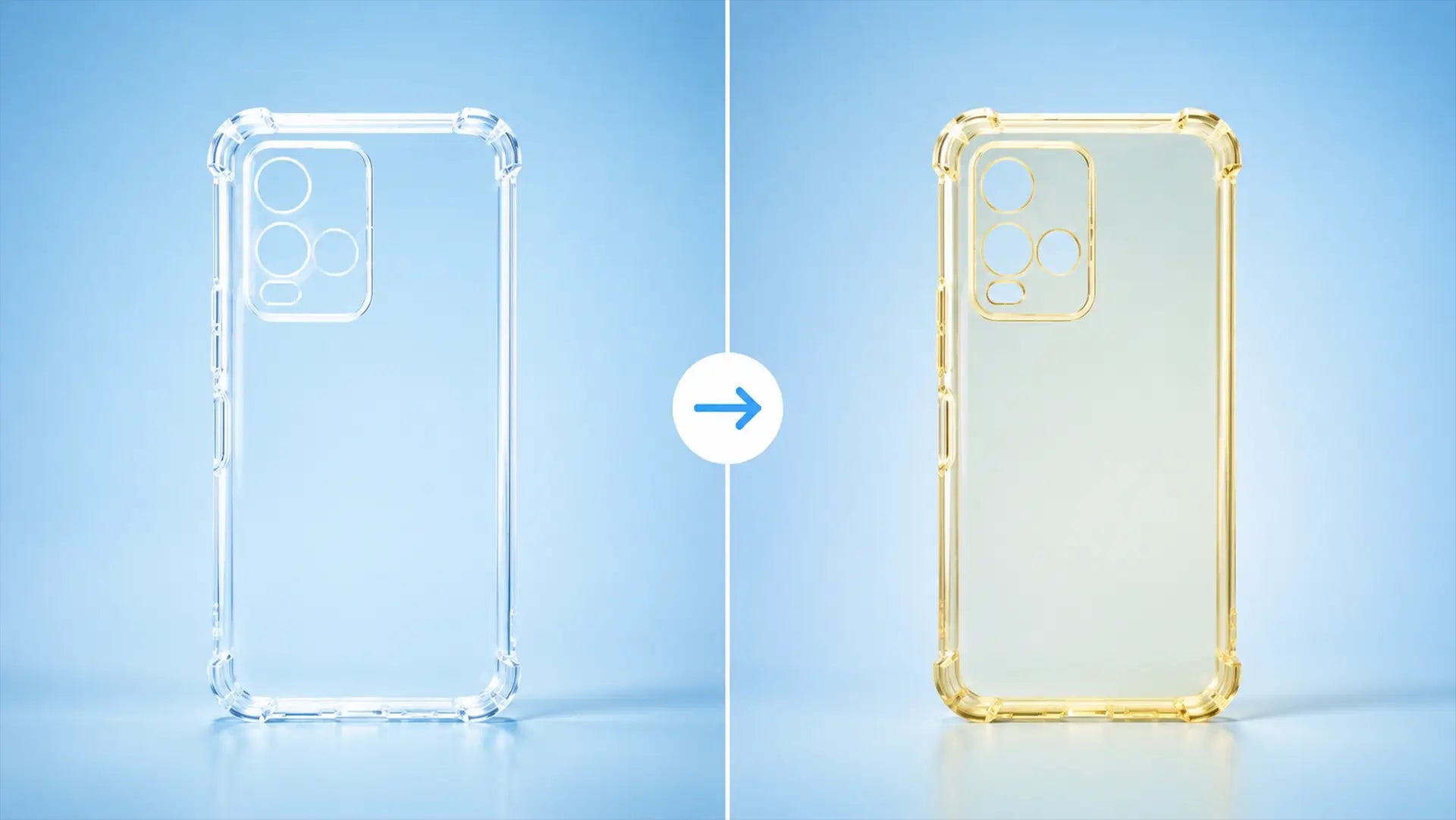
- Why Phone Cases Turn Yellow Over Time
- The Main Causes Behind Phone Case Yellowing
- Why TPU Cases Yellow Faster Than Other Materials
- Daily Usage Conditions That Lead to Faster Yellowing
- Can You Prevent Clear Phone Cases From Turning Yellow?
- Anti-Yellowing Cases vs Standard Clear Cases
- What to Choose If You Don’t Want Yellowing
- Is Phone Case Yellowing a Defect or Normal Aging?
Why Phone Cases Turn Yellow Over Time
Clear phone cases often start turning yellow after weeks or months of use. This is usually first noticed along the edges or high-touch areas. Many users see it after daily carrying in pockets or placing the phone on desks near sunlight.
The change happens because the transparent materials used in most cases are not fully stable over time. They gradually react to everyday exposure, which alters their original clear appearance.
This yellowing is a normal material aging process, not an immediate defect. Some cases stay clear longer depending on usage conditions and material quality. Environments with less sunlight and heat usually slow down the visible change.
The Main Causes Behind Phone Case Yellowing
Clear phone case yellowing is mainly driven by a combination of environmental exposure and material chemistry changes in TPU. The process is gradual and results from multiple factors acting together over time.
- UV exposure → polymer breakdown → surface discoloration UV light from sunlight breaks chemical bonds in TPU. This weakens the polymer chain. The result is a gradual yellow tint, especially on cases used near windows or in direct outdoor light.
- Heat exposure → accelerated oxidation → faster aging Heat from pockets, car dashboards, or charging devices speeds up oxidation. In environments like a sun-heated car interior, TPU ages faster and loses clarity more quickly.
- Oxidation of TPU → molecular structure change → permanent yellowing Oxygen reacts with the polymer over time. This creates irreversible changes in the material structure. The effect is a deeper, more stable yellow tone rather than surface staining.
- Skin oils and sweat → surface contamination → uneven discoloration Daily handling introduces oils and moisture. These interact with TPU and UV exposure, creating patchy or uneven yellowing, especially on high-contact areas.
It is important to note that TPU formulations vary. Not all grades respond at the same rate. Environmental conditions strongly influence how fast yellowing appears.

Why TPU Cases Yellow Faster Than Other Materials
TPU (thermoplastic polyurethane) tends to yellow faster than silicone or polycarbonate because of its molecular structure. It is more chemically reactive under UV light and heat, which accelerates oxidation and visible discoloration. Below is a direct material comparison.
| Material | Structural Behavior | Reaction to UV / Heat | Oxidation Sensitivity | Yellowing Tendency | Key Reason |
|---|---|---|---|---|---|
| TPU (Thermoplastic Polyurethane) | Flexible, semi-crystalline polymer | High sensitivity to UV and heat | High | Fast | Polymer chain breaks down more easily, leading to visible yellowing over time |
| Silicone | Stable elastomer with strong chemical resistance | Low to moderate reaction | Low | Slow | More chemically stable structure resists oxidation and UV damage |
| Polycarbonate (PC) | Rigid, glass-like plastic | Moderate UV resistance | Moderate | Very slow | Stronger molecular stability, but may degrade or haze instead of yellowing quickly |
TPU turns yellow faster mainly because its flexible structure is more exposed to environmental stress. UV exposure phone case discoloration typically starts at the surface, then spreads as oxidation continues inside the material.
It is important to note that TPU phone case yellowing speed varies significantly by formulation. Higher-grade TPU with stabilizers or coatings can resist discoloration longer, while low-cost TPU degrades much faster under the same conditions.
Daily Usage Conditions That Lead to Faster Yellowing
Clear phone case yellowing is strongly influenced by everyday environments. TPU does not change uniformly for all users. The speed depends on exposure level, temperature, and handling habits.
- Desk near a window → phone case UV damage → surface oxidation starts Phones placed on sunlit desks are exposed to constant low-level UV light. Over time, this triggers slow polymer breakdown. The result is gradual yellowing, usually starting on the side facing the light.
- Hot pocket environment → heat and TPU degradation → faster aging Carrying a phone in tight jeans or jackets creates trapped heat. Combined with body warmth and friction, TPU degrades faster. This often leads to earlier and more noticeable discoloration.
- Car dashboard exposure → strong UV + heat → rapid color shift Leaving a phone on a dashboard exposes it to intense sunlight and high temperatures. This is one of the fastest scenarios for TPU aging and visible yellow tint formation.
- Daily commuting use → friction + oils → uneven discoloration Frequent handling during commuting introduces sweat, skin oils, and constant contact. These factors interact with UV exposure and create patchy yellowing patterns.

It is important to note that not all users experience yellowing at the same speed. TPU grade, coating quality, and environmental intensity all significantly affect how quickly discoloration appears.
Can You Prevent Clear Phone Cases From Turning Yellow?
Clear phone case yellowing cannot be fully prevented. TPU is a reactive material, and oxidation will eventually occur. However, certain conditions and material choices can slow the process.
Most so-called anti yellow phone case designs do not stop yellowing completely. They only delay it through stabilizers, coatings, or higher-grade TPU formulations. Over time, UV exposure and heat still cause molecular breakdown.
What actually helps slow down yellowing
- Keep away from direct sunlight → reduces phone case UV damage → slows surface oxidation Avoid leaving your phone on windowsills, car dashboards, or sun-exposed desks for long periods.
- Reduce heat exposure → limits heat and TPU degradation → slows chemical aging High temperatures accelerate oxidation. Keeping the phone cool helps maintain clarity longer.
- Choose higher-grade TPU → improved stabilizers → delayed discoloration Some TPU formulations include UV stabilizers and anti-oxidation additives. These slow but do not eliminate yellowing.
- Regular cleaning → removes oils → reduces surface interaction effects Skin oils and sweat can accelerate uneven discoloration. Gentle cleaning helps maintain a more consistent appearance.
Important reality check
Even with optimized materials and careful use, no clear TPU case stays transparent forever. Anti-yellowing features extend lifespan, but they cannot fully stop oxidation of the polymer structure. The process is inherent to TPU chemistry, only its speed can be influenced, not eliminated.

Anti-Yellowing Cases vs Standard Clear Cases
Anti yellow phone case vs normal case mainly differs in how the TPU material is treated during production. Both still rely on TPU, but the resistance to discoloration is not the same.
- Material structure → TPU with stabilizers vs basic TPU → slower oxidation Anti-yellow versions include UV stabilizers that slow down oxidation of TPU material. Standard clear cases use basic TPU, so TPU phone case yellowing appears faster under the same conditions.
- Surface treatment → coating layer vs no coating → different wear behavior Clear case yellowing resistance is often improved with a protective coating. This layer reduces UV exposure phone case discoloration at the start, but it gradually wears off with daily use.
- Environmental reaction → delayed change vs faster change → same end result Heat and light still drive heat and TPU degradation in both types. Anti-yellow cases simply delay visible yellowing, especially in everyday exposure like desk sunlight or pocket carry.
In real use, a phone left near a sunny window or carried in a warm pocket will still show discoloration over time. Anti-yellowing additives help slow the process, but they do not stop it completely.

What to Choose If You Don’t Want Yellowing
There is no material that completely avoids yellowing forever. The best phone case that doesn’t yellow depends on how you balance clarity, durability, and long-term appearance.
- IF you want full clarity and a clear look → THEN avoid TPU → choose aramid fiber phone case vs TPU Aramid fiber does not yellow because it is a woven structure, not a transparent polymer. However, it is not a fully clear case, so you lose the see-through design.
- IF you want clear appearance + low cost → THEN choose TPU → expect TPU phone case yellowing over time TPU gives a transparent look and good flexibility, but oxidation of TPU material will still happen. Yellowing speed depends on heat, UV exposure phone case discoloration, and daily handling.
- IF you want slower aging clear case → THEN choose anti-yellow TPU → delayed but not prevented change Anti-yellow versions improve clear case yellowing resistance using stabilizers. They reduce heat and TPU degradation effects but do not eliminate them.
- IF you prioritize long-term stable appearance → THEN avoid clear materials → choose solid or woven finishes Non-transparent materials avoid visible discoloration entirely, even though the surface still ages internally.
The trade-off is simple: no material stays perfect forever. You are choosing between clarity, durability, and aging visibility.
If you prefer a cleaner long-term appearance without visible yellowing, aramid fiber phone cases are worth considering. Unlike transparent TPU cases, they use a woven structure instead of a clear polymer, so they do not show yellowing in daily use, but the trade-off is that you lose full transparency and the see-through design.
👉 Explore our Aramid Fiber Phone Cases designed for long-term use:
Is Phone Case Yellowing a Defect or Normal Aging?
Phone case yellowing is normal phone case yellowing for TPU, and it is part of natural material aging rather than a defect. TPU reacts to UV exposure, heat, and daily handling, which slowly changes its structure and leads to visible color shifts over time.
In real use, a case placed near a sunny window or carried daily in a warm pocket will gradually show discoloration. This is expected behavior for TPU materials. It does not indicate a quality problem, even when the change becomes noticeable after regular use.
SNAP ON. PROTECT MORE.
Aramid magnetic case for 360° protection.
Share:
iPhone 18 vs iPhone 17 Pro: Should You Upgrade or Wait?
Do You Need a Screen Protector With a Phone Case? A Practical Guide