

- What a Phone Case Actually Protects (and What It Cannot)
- What a Screen Protector Adds to Your Phone Protection Setup
- Phone Case vs Screen Protector: How They Work Together
- Do You Really Need Both? Choose Based on How You Use Your Phone
- Common Mistakes When Combining a Case and Screen Protector
- How to Choose the Right Protection Setup for Your Phone
- FAQ: Screen Protector With Phone Case Questions
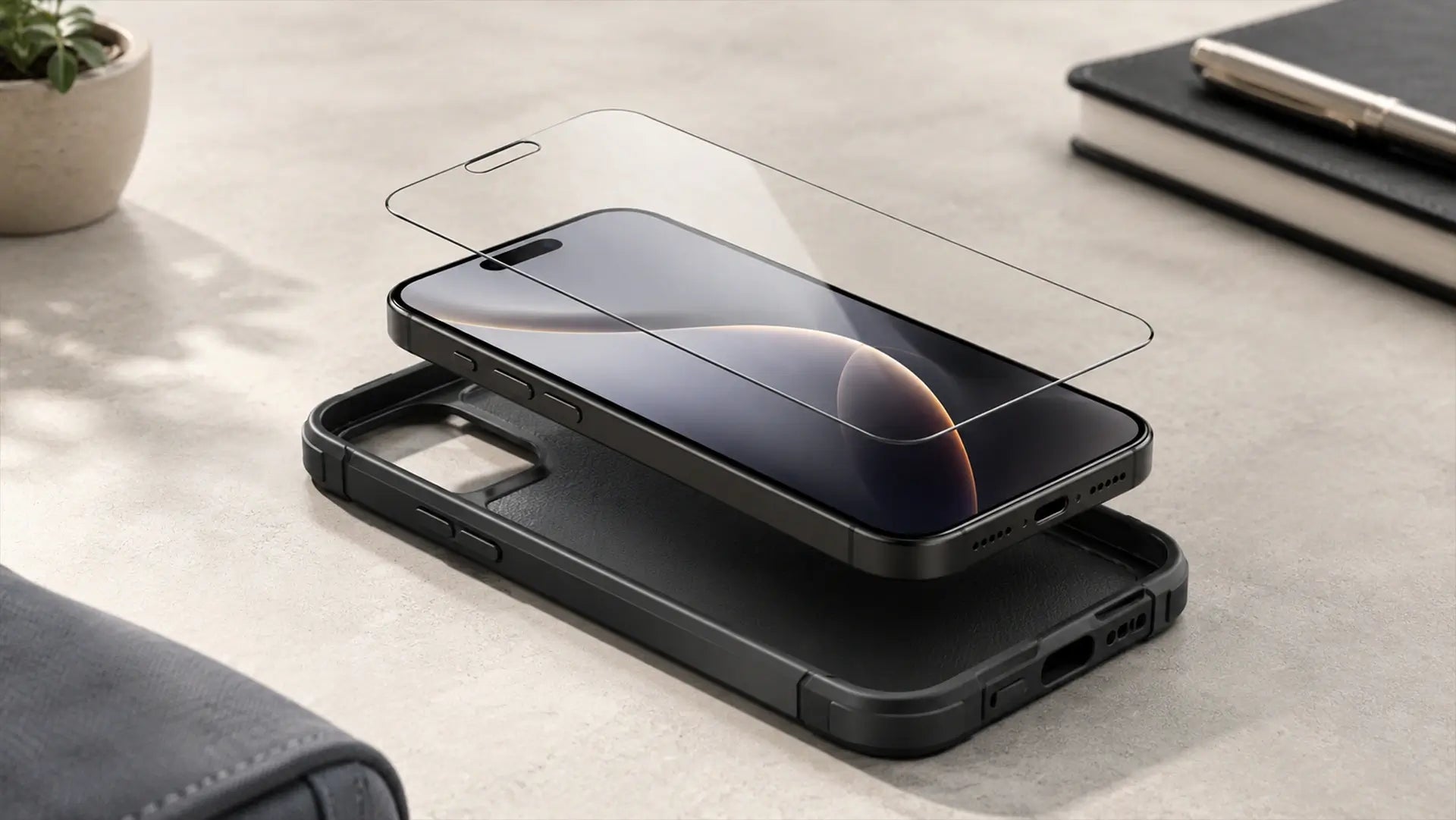
A phone case and a screen protector solve different protection problems. A case helps protect the back, corners, and edges from drops and daily impacts, while a screen protector adds extra protection against scratches and direct screen contact.
Using a screen protector with a phone case can provide more complete coverage, but it is not necessary for everyone. Your choice depends on how you use your phone. If your phone spends most of the day on a desk or inside a bag, a case alone may be enough. However, daily commuting, travel, or frequent outdoor use can increase the chance of screen scratches and accidental damage.
A phone case can reduce impact from corner drops, but it usually cannot prevent the screen from hitting rough surfaces directly.
A screen protector is not a guarantee against every type of screen damage. Strong drops, pressure, or impacts can still affect the display underneath. The choice comes down to your habits, risk level, and how much extra protection you prefer for daily use.
What a Phone Case Actually Protects (and What It Cannot)
A phone case mainly protects the areas most likely to experience everyday damage. Understanding what does a phone case protect helps you choose the right level of coverage instead of expecting it to prevent every problem.

💡A typical case helps protect:
- Corners and edges: Adds cushioning where impact forces are often concentrated.
- Camera area: Raised lips can help keep lenses away from flat surfaces.
- Side buttons and frame: Covers exposed areas from minor bumps and wear.
The way phone cases protect phones depends on their construction. Flexible materials can absorb some impact energy during drops. Raised edges create a small gap between the screen or camera and a flat surface. Corners need extra attention because they usually experience higher stress during accidental falls.
For example, a phone slipping from a desk may land on a corner first. A case can reduce the impact, but the result depends on the height, angle, and surface involved.
A phone case still has clear limits. It may not stop screen cracks from direct hits, protect against every drop, or prevent damage from extreme force. These phone case protection limits are why some users choose a screen protector with phone case for additional coverage.
What a Screen Protector Adds to Your Phone Protection Setup
A screen protector adds a separate layer of defense for the most exposed part of your phone: the display. Understanding what does a screen protector do helps explain why many users choose a screen protector with phone case instead of relying on a case alone.
A tempered glass screen protector works as a replaceable surface layer placed above the original screen. It helps reduce scratches, small marks, and daily surface wear from common situations such as carrying a phone with keys, placing it inside a bag, or using it on a busy desk.
Key tempered glass screen protector benefits include:
- Scratch resistance: Helps protect the display surface from everyday contact.
- Replaceable protection layer: Allows users to replace the protector instead of the original glass.
- Added daily protection: Reduces concerns from normal handling and minor impacts.
Modern smartphone glass has become more resistant over time, with manufacturers improving durability through material development. However, a screen protector does not change the properties of the original display glass.
It is also not crack-proof. Strong impacts can still damage the screen underneath. Results depend on glass quality, installation accuracy, and how the phone is used. Some users may also notice slight changes in touch feel or screen clarity.
It is also not crack-proof. Strong impacts can still damage the screen underneath. Results depend on glass quality, installation accuracy, and how the phone is used. Some users may also notice slight changes in touch feel or screen clarity.

Phone Case vs Screen Protector: How They Work Together
A phone case and screen protector solve different protection problems. The choice between phone case vs screen protector is not about replacing one with the other. They work together by covering different parts of the device.
| Protection Setup | Main Protection Area | Strength | Limitation |
|---|---|---|---|
| Phone case | Back, corners, edges, camera area | Helps reduce damage from drops and daily contact | Cannot fully protect the front glass from direct impact |
| Screen protector | Display surface | Helps reduce scratches and surface wear | Cannot prevent all cracks or damage from strong impacts |
| Case + screen protector | Full everyday coverage | Covers more common risks from daily use | Adds some extra thickness and may change the phone feel |

In real use, these two accessories handle different situations. A phone dropped corner-first during travel may benefit from a case absorbing some impact around the edges. A phone carried in a pocket with keys may need a screen protector to reduce surface scratches.
A case only setup can work well for users who prefer a thinner feel and have lower risk during daily use. A case and screen protector setup adds more coverage but may feel slightly different in hand.
There is no setup that prevents every type of damage. The right choice depends on your routine, how you carry your phone, and how much protection you want to add.
Do You Really Need Both? Choose Based on How You Use Your Phone
The best protection setup for iPhone depends on your daily routine. A screen protector with phone case is useful for many users, but it is not the right choice for everyone.
| Your Usage | Recommended Setup | Why |
|---|---|---|
| Office users | Case only or case + screen protector | Lower drop risk, but desk surfaces and bags can still cause scratches |
| Commuters | Case + screen protector | More movement creates more chances for drops and screen contact |
| Travelers | Case + screen protector | Phones face more unknown surfaces, bags, and handling situations |
| Outdoor users | Case + screen protector | More exposure to falls, dust, and rough environments |
For someone who mainly uses a phone at work, a thinner setup may feel more comfortable during daily carry. A commuter who handles a phone on trains or crowded streets may prefer extra screen coverage.
The decision comes down to balancing comfort and protection. A thinner setup usually feels lighter, while adding more layers can increase size and change the hand feel. No accessory removes every risk, and accidents can still happen.
If you often travel, carry your phone with other items, or worry about screen scratches, adding a screen protector may be worth it. If your phone stays mostly in controlled environments, a case alone may be enough.

Common Mistakes When Combining a Case and Screen Protector
Using a screen protector with phone case can improve daily protection, but poor compatibility can create new problems. Avoiding a few common mistakes can help create a better setup.
- Choosing a case and screen protector without checking compatibilityDifferent phone models and case designs have different dimensions. A case with a raised lip may press against a screen protector that is too large, causing edge lifting. Checking screen protector compatibility with phone case before purchase can prevent fit issues.
- Ignoring edge spacing between accessoriesA small gap between the screen protector and case edge helps avoid pressure. When both parts overlap too closely, the protector may move, crack, or separate over time.
- Installing without proper cleaningDust and fingerprints under the protector can create bubbles after installation. Cleaning the screen carefully before applying the protector helps improve the final result.
- Assuming every combination works the sameResults vary depending on product quality, phone model, and accessory design. Some combinations fit well, while others may have touch issues or visible gaps.
How to Choose the Right Protection Setup for Your Phone
Choosing a screen protector with phone case depends on how your phone fits into your daily life. There is no single setup that works for every user. Your environment, handling habits, and comfort preferences should guide the decision.
| Usage Style | Suggested Setup | Reason |
|---|---|---|
| Mostly office use | Slim case or case + screen protector | Lower impact risk, but scratches can still happen from desks or bags |
| Daily commuting | Case + screen protector | More movement increases chances of drops and contact damage |
| Frequent travel | Case + screen protector | More handling and unfamiliar surfaces create extra risks |
| Minimal carry and careful use | Slim case protection | Less bulk may be preferred when protection needs are lower |

Consider these questions before choosing:
- Do you often place your phone with keys or other items?
- Does your phone spend time outdoors or in crowded areas?
- Do you prefer a thinner feel over added coverage?
- Are screen scratches a bigger concern than extra case thickness?
When comparing tempered glass vs no screen protector, the choice depends on your habits. Tempered glass adds a replaceable layer for surface protection, while going without one keeps the original screen feel.
FAQ: Screen Protector With Phone Case Questions
Do I need a screen protector if I have a phone case?
A phone case protects the back, edges, and corners, but it does not fully cover the front glass. If you commute, travel, or often place your phone on different surfaces, a screen protector with phone case can add extra protection.
Can a phone case protect your screen?
Most cases cannot protect the screen from direct contact with rough surfaces. Raised edges can create some separation when the phone is placed face down, but drops onto the display can still cause damage.
Is a tempered glass screen protector worth it?
A tempered glass screen protector can be useful for reducing scratches and daily surface wear. It is not crack-proof, and results depend on glass quality, installation, and how the phone is used.
Does a screen protector work with every phone case?
Not always. Some cases may press against the protector edges and cause lifting or bubbles. Checking compatibility between the case and protector before buying can help avoid fit problems.
Can I use an iPhone without a screen protector?
Yes, some users prefer the original screen feel and use only a case. However, daily habits like carrying keys, using bags, or placing the phone on rough surfaces may increase scratch risks.
SNAP ON. PROTECT MORE.
Aramid magnetic case for 360° protection.
Share:
Why Do Clear Phone Cases Turn Yellow? Causes, Science & Prevention Guide
What Is Aramid Fiber? How This Material Works in Phone Cases