

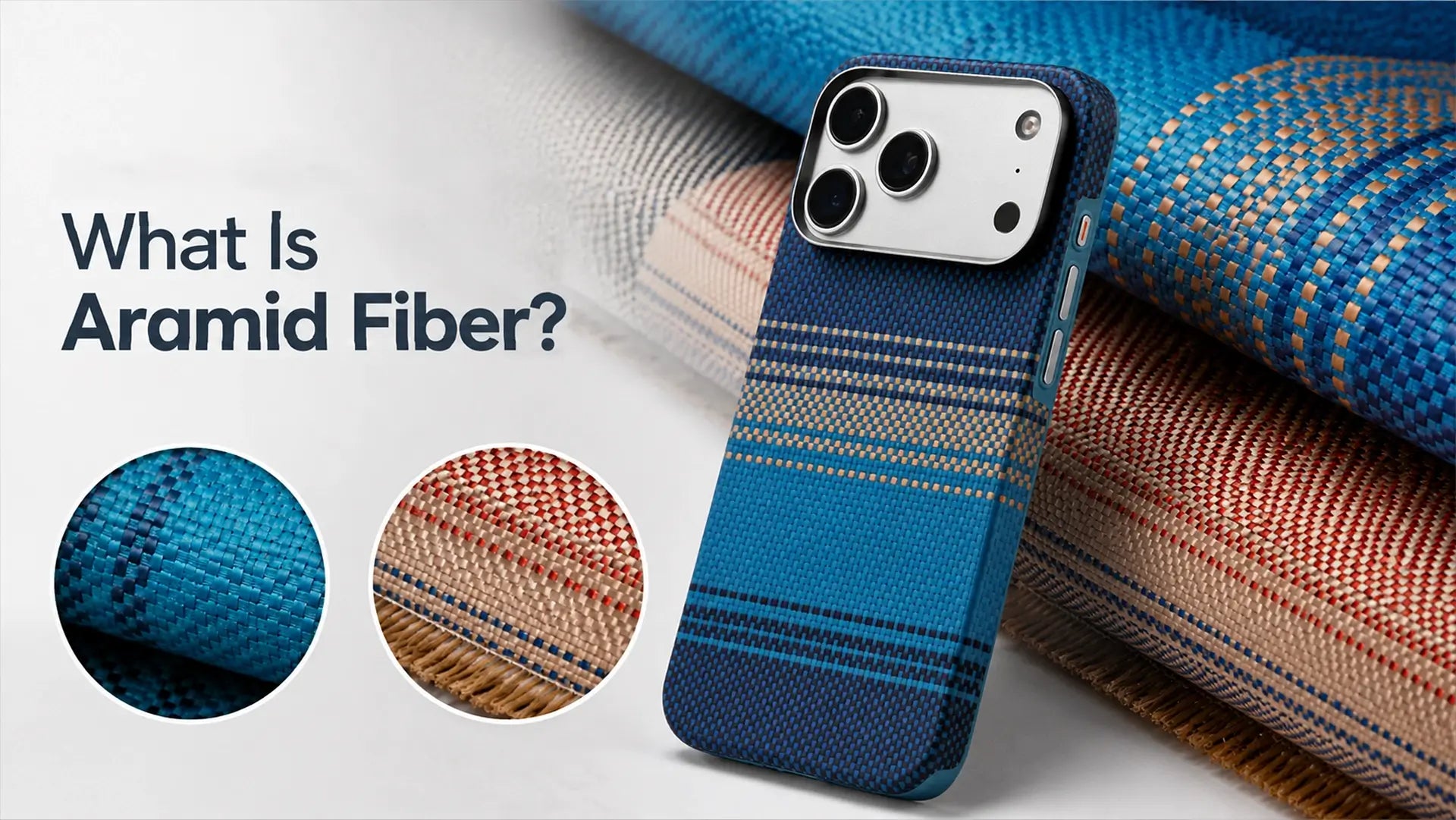
- What Is Aramid Fiber?
- Why Is Aramid Fiber Used in Phone Cases?
- How Protective Is an Aramid Fiber Phone Case?
- Aramid Fiber vs Other Phone Case Materials
- Aramid Fiber vs Kevlar: Are They the Same?
- 600D vs 1500D Aramid Fiber: Which One Should You Choose?
- Are Aramid Fiber Phone Cases Worth It?
- FAQ: Aramid Fiber Phone Case Questions
What Is Aramid Fiber?
Aramid fiber is a type of synthetic fiber known for its high strength compared with its low weight. The name comes from aromatic polyamide, a fiber structure built from strong molecular bonds that help resist stretching and tearing.
Unlike common plastic materials, aramid fiber has a woven structure. Individual fibers work together to create a material that feels lightweight while maintaining strong structural stability. These aramid fiber properties make it useful in technical products where weight and strength need to be balanced.
Aramid fiber combines a lightweight structure with strong molecular bonds, making it suitable for applications where weight and strength need to be balanced.
In daily use, many people notice material differences when holding a phone case. A thin aramid fiber phone case often feels closer to the original shape of the phone, while still having a distinct woven texture compared with standard plastic cases.

Manufacturers use aramid fiber material in products that need strength without adding unnecessary bulk. However, the material itself does not automatically mean a product has maximum protection. The final performance depends on the complete design, including the case structure, edge coverage, and other protective features.
Aramid fiber is valued because it combines light weight, durability, and a unique appearance. It is one material choice among many, with its own advantages and limitations depending on how it is used.
Why Is Aramid Fiber Used in Phone Cases?
Aramid fiber is used in phone cases because its material properties fit the needs of modern everyday protection. The fiber structure allows manufacturers to create thin cases that feel lightweight while maintaining a strong, stable shape.
Aramid fiber helps phone cases balance lightweight construction with structural strength, making it suitable for everyday protection needs.
One reason aramid fiber is widely used in phone cases is its balance between strength and weight. The woven structure helps maintain rigidity while keeping the material thin and lightweight for everyday carry.

Aramid Fiber: Strength & Protection
Aramid fiber combines lightweight performance with reliable everyday protection. Its woven structure provides a strong feel without adding unnecessary bulk.
However, protection depends on more than the material alone. A complete case design with proper edge coverage and corner support plays an important role in everyday drop resistance.
This balance makes aramid fiber a popular choice for users who want a protective phone case that stays lightweight, durable, and comfortable to use every day.
How Protective Is an Aramid Fiber Phone Case?
An aramid fiber phone case can offer strong everyday protection, but the material is only one part of the system. Aramid fiber has high stiffness and low weight, which helps create a stable case structure without adding much bulk.
The actual protection level depends on several factors working together:
- Aramid fiber layer: Helps maintain rigidity and resist deformation during daily impacts.
- TPU edge cushioning: Absorbs shock around corners where many drops happen.
- Raised edges: Helps keep the screen and camera away from direct contact with flat surfaces.
- Overall case structure: Determines how impact forces are distributed across the phone.
In daily use, these details matter when a phone slips from a pocket, falls from an office desk, or gets bumped during a commute. A lightweight protective phone case can feel easier to carry while still adding meaningful protection compared with using no case.

However, an aramid fiber case has limits. A thinner case usually cannot absorb the same impact levels as a thicker rugged case with more cushioning material. Aramid fiber protection works best when the material is combined with thoughtful case construction.
Choosing the right case depends on your routine, drop risks, and how much thickness you are willing to carry every day.
Aramid fiber contributes to protection, but the complete case structure determines how well a phone handles everyday impacts.
Aramid Fiber vs Other Phone Case Materials
Choosing between different phone case materials depends on how you use your phone every day. An aramid fiber phone case, TPU, silicone, plastic, and carbon fiber each create a different balance between weight, feel, and protection.
| Material | Weight & Feel | Protection Approach | Suitable Users |
|---|---|---|---|
| Aramid Fiber | Very lightweight with a firm woven texture | Adds structural stiffness while keeping the case thin | Office users and people who dislike bulky cases |
| TPU | Flexible and slightly softer to touch | Absorbs impact through flexible edge coverage | Commuters needing everyday drop resistance |
| Silicone | Soft, grippy, and comfortable in hand | Helps reduce slipping and adds basic cushioning | Users who prefer a softer phone grip |
| Plastic | Rigid and lightweight but less flexible | Uses hard shell coverage for basic protection | Users looking for simple, affordable cases |
| Carbon Fiber | Lightweight with a stiff surface feel | Focuses on rigidity and structural strength | Users comparing aramid fiber vs carbon fiber options |
Material structure changes how a case feels during daily use. A woven aramid fiber case often feels thinner and more refined than flexible materials, while TPU usually feels softer and more shock-absorbing.
There is no single best phone case material for everyone. A frequent traveler may value cushioning, while an office user may prefer a lighter case that fits easily into pockets and bags.

Aramid Fiber vs Kevlar: Are They the Same?
Many shoppers see different material names when researching phone cases and wonder if aramid fiber and Kevlar are identical. The short answer is that they are related, but they are not the same term.
Kevlar is a specific type of aramid fiber, while aramid fiber refers to the broader material category.
Aramid fiber is a broader category of synthetic fibers with strong molecular structures and lightweight characteristics. Kevlar is a specific trademarked type of aramid fiber developed by DuPont. In other words, Kevlar is one example within the larger aramid fiber family.
Phone case brands often use the term aramid fiber because their products may use different aramid materials or fiber sources. Not every aramid fiber phone case contains Kevlar, even though both materials belong to the same general fiber category.
When comparing materials, shoppers may notice similar characteristics, such as a woven appearance, low weight, and a firm surface feel. However, the final phone case performance depends on more than the fiber itself. Case thickness, edge design, internal structure, and additional materials all affect real-world protection.

Understanding the difference helps avoid confusion when comparing options. Aramid fiber describes the material group, while Kevlar refers to one specific branded material within that group.
600D vs 1500D Aramid Fiber: Which One Should You Choose?
When comparing aramid fiber phone case options, the “D” number refers to Denier, a measurement related to fiber thickness and weight. A higher Denier number usually means thicker individual fibers, which can change the texture, appearance, and overall feel of the weave.
| Weave | Appearance & Feel | Best Fit For |
|---|---|---|
| 600D Aramid Fiber | Finer weave with a smoother, more uniform texture | Business users and people who prefer a cleaner, lightweight feel |
| 1500D Aramid Fiber | Larger weave pattern with a more visible texture | Users who like a stronger visual style and more noticeable surface feel |
Both 600D aramid fiber and 1500D aramid fiber use the same material family, but they create different experiences. A 600D weave often feels more subtle in the hand, which suits office environments and daily carrying. A 1500D weave has a more visible pattern that some users prefer for its texture and character.
For outdoor commuters or people who handle their phone frequently, the choice may come down to grip and appearance rather than one weave being automatically better. The final case performance also depends on the complete construction, including thickness and supporting materials.
Choosing between 600D and 1500D aramid fiber is mainly about the balance between visual style, hand feel, and personal preference.

Are Aramid Fiber Phone Cases Worth It?
Whether an aramid fiber phone case is worth it depends on how you use your phone daily. Aramid fiber is a good fit for users who want a lightweight protective phone case with a thin feel and distinct texture.
Choose aramid fiber if…
- You carry your phone around an office and prefer a slimmer case profile.
- You travel often and want less bulk inside bags or pockets.
- You commute daily and want protection without a heavy case feeling.
- You value a woven material texture instead of common plastic finishes.
- You prefer a balance between low weight and structural support.
Consider another option if…
- You need maximum impact absorption for frequent drops.
- You work in environments where phones face harsh conditions.
- You prefer a softer grip with thicker cushioning.
- You want the lowest-cost case option.

Many people asking “are aramid fiber cases worth it” are comparing comfort with protection. A well-made aramid fiber phone case can feel easier to carry during work, travel, and commuting. However, the material alone does not decide the full protection level. Case structure, edge coverage, and impact materials still matter.
The best aramid fiber phone case is not the same choice for every user. It works best for people who value lightweight construction while accepting some limits compared with thicker protective designs.
Aramid fiber is a strong choice for lightweight everyday protection, but the right case depends on your usage needs and protection expectations.
FAQ: Aramid Fiber Phone Case Questions
Still deciding if an aramid fiber phone case is right for you? These answers cover the most common questions about aramid fiber materials, protection, MagSafe compatibility, and everyday use.
What is an aramid fiber phone case?
An aramid fiber phone case uses a synthetic fiber material known for low weight and structural strength. The final protection depends on the full case design, including edges, thickness, and supporting materials.
Is aramid fiber the same as Kevlar?
No. Aramid fiber is a broader material category, while Kevlar is one specific trademarked type of aramid fiber. Not every aramid fiber phone case uses Kevlar.
Are aramid fiber cases protective?
Aramid fiber cases can support everyday protection through a lightweight and rigid structure. However, they may not absorb impacts like thicker cases with larger cushioning systems.
Are aramid fiber cases worth the price?
They can be worth considering for users who value thin construction, low weight, and a unique material feel. Users needing maximum drop protection may prefer a thicker case style.
Does aramid fiber affect MagSafe?
Aramid fiber itself usually does not block MagSafe when the case includes a compatible magnetic system. Actual performance depends on the case construction and magnet placement.
What is 600D vs 1500D aramid fiber?
600D and 1500D describe different fiber thickness levels. The difference mainly affects weave appearance and hand feel rather than guaranteeing one option is always better.
SNAP ON. PROTECT MORE.
Aramid magnetic case for 360° protection.
Share:
Do You Need a Screen Protector With a Phone Case? A Practical Guide
Aramid vs Carbon Fiber Phone Cases: Which Material Fits Your Everyday Use?