

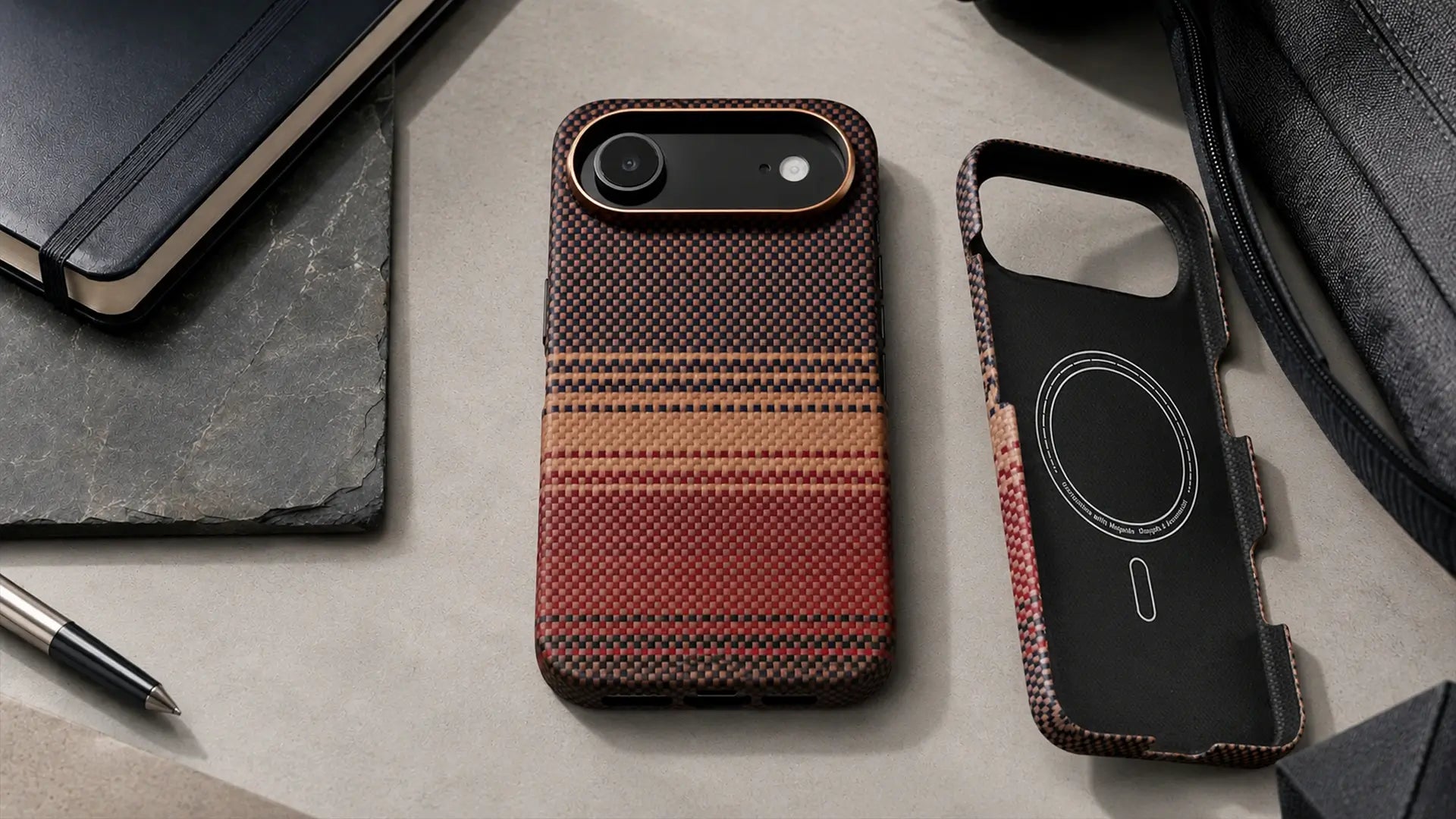
- What Does “Protection” Mean in a Thin Phone Case?
- How Thin Cases Protect the Screen and Camera
- Thin Phone Case vs Rugged Phone Case
- What to Look For in Thin Protective Phone Cases
- Which Protection Level Fits Your Daily Use?
- FAQ About Thin Phone Case Protection
- Final Verdict: Is a Thin Case Protective Enough?
Thin cases protect your phone against most light everyday hazards, but they cannot cushion major impacts. To decide if thin cases protect your phone, you must look at construction rather than thickness alone. For example, a slim protective case shields your device from metal keys in a pocket or rough wooden desks.
Generally, thin protective phone cases defend against:
- Surface scratches: They guard the glass back and metal frame from pocket friction.
- Flat contact: Raised lips around the screen and camera lenses prevent direct scraping on hard surfaces.
- Light bumps: Flexible side edges absorb minor jolts during a busy daily commute.
- Short drops: Quality corner cushioning can prevent cracks during low-altitude slips onto hardwood floors.
Still, a thin case has far less material to absorb heavy shock than a thick, rugged alternative. Because there is less physical room for cushioning, actual safety depends on smart construction details. Features like corner coverage, flexible borders, and a secure grip make all the difference during a fall.
While thin phone case protection is reliable for everyday use, slimness alone does not indicate overall safety.
What Does “Protection” Mean in a Thin Phone Case?
Protection can mean several different things, from preventing scratches to absorbing the force of a drop. A case that keeps the camera away from a desk may still offer little impact cushioning. That distinction matters when comparing an ultra-thin shell with a slim protective case.
| Protection Type | What It Helps With | What It Cannot Guarantee |
|---|---|---|
| Scratch and scuff protection | Shields the back and sides from keys, bags, and rough surfaces | Protection from cracks or internal damage after a drop |
| Screen and camera clearance | Raised lips keep glass away from flat desks and tables | Safety when the phone lands on gravel, edges, or raised objects |
| Light impact protection | Flexible edges and covered corners may soften bumps and short accidental drops | Reliable protection from greater heights or hard corner impacts |
| Higher-impact drop protection | Internal cushioning and reinforced structure can absorb and spread more force | Damage prevention in every fall or landing position |
Extra thickness can create more space for cushioning, but thickness alone does not determine thin phone case protection. Corner coverage, edge flexibility, grip, secure fit, and overall structure also influence how impact travels through the case.

An ultra-thin shell usually focuses on scratch protection and basic surface clearance. It may have rigid edges, shallow lips, and little internal cushioning. A slim protective case remains relatively thin but adds flexible borders, stronger corner coverage, and a more secure fit.
Raised edges and a scratch-resistant surface are useful features. However, they do not prove that a case can manage stronger drop forces.
How Thin Cases Protect the Screen and Camera
How Raised Screen Bezels Work
Raised edges create clearance by holding exposed glass slightly above the surface below it. On a raised bezel phone case, the front lip must extend beyond the screen glass. This reduces direct contact when placing the phone face-down on a desk, café table, or airport tray.
The benefit depends on lip height and case fit. A shallow or uneven bezel may lose clearance if the case shifts, bends, or sits below a screen protector.
How Raised Camera Edges Work
A camera protection case uses a raised frame around the camera area. That frame must sit above the highest lens to keep the glass away from flat surfaces.
This feature helps when setting the phone on a desk, car console, or table. A raised camera edge phone case can also reduce lens contact with dust and small debris. However, the frame does not absorb every force reaching the camera module.
[Image Placeholder: side-view diagram showing the raised screen bezel, camera edge, corner coverage, and glass clearance]
Where Raised Edges Stop Helping
Raised edges work best when the phone meets a broad, flat surface. They may offer little separation if the display lands on gravel, a table corner, or another raised object.
Impact angle also matters. A corner-first drop sends force through the case structure before the bezel can help. Flexible corners and secure edge coverage may soften that force, but they cannot prevent every cracked screen or damaged lens.

Thin Phone Case vs Rugged Phone Case
The main trade-off in a thin phone case vs rugged phone case is carrying comfort versus impact cushioning. Thin cases keep the phone lighter and easier to slide into a pocket. Rugged cases add bulk but leave more room for flexible corners and layered materials to deform during a drop.
| Factor | Thin Protective Case | Rugged Case |
|---|---|---|
| Pocket comfort | Easy to carry in fitted pockets | Bulkier and more noticeable |
| Weight | Keeps the phone closer to its original weight | Adds more material and weight |
| Corner cushioning | Limited space for impact absorption | Thicker corners can compress during impact |
| Screen and camera clearance | Usually has modest raised edges | Often uses taller, wider protective lips |
| Grip | Textured slim cases can reduce slips | Deeper sides may feel more secure |
| Everyday bumps | Suitable for desks, bags, commuting, and short drops | Handles routine knocks with extra cushioning |
| Harder or repeated drops | Less suited to frequent high-risk falls | Better suited to outdoor work and frequent drops |
| Main limitation | Less impact-absorbing material | More bulk and reduced pocket comfort |

For office use, commuting, and careful pocket carry, a thin protective case is usually the better balance. It keeps the phone manageable while covering common daily risks.
Choose a rugged case if you often drop your phone, work outdoors, or regularly handle it while leaving a car or carrying equipment. Rugged cases still cannot prevent every type of damage, but their thicker edges offer more room to manage impact force.
Choose a thin protective case for easier daily carrying, and a rugged case for frequent drops or higher-risk use.
What to Look For in Thin Protective Phone Cases
- Full corner coverage — Check that all four corners are enclosed. Corners often strike first during pocket-height or commuting drops, concentrating force in a small area.
- Flexible or cushioned edges — Look for borders that can compress slightly on impact. A thin phone case with drop protection needs some room to deform rather than transferring force directly.
- Raised screen bezel — Confirm that the front lip sits above the display glass. A raised bezel phone case reduces direct screen contact on desks and other flat surfaces.
- Raised camera frame — The frame should extend beyond the highest camera lens. A camera protection case can prevent routine contact with tables, though uneven objects may still reach the glass.
- Secure, precise fit — Press around the sides and corners for movement. Loose edges can shift during a corner-first drop and reduce coverage where it matters most.
- Reliable side grip — Compare smooth and textured surfaces before buying. Better grip reduces slips when removing the phone from a pocket, leaving a car, or using it one-handed.
- Specific drop-test information — Check whether the seller identifies the phone model, drop height, impact surface, number of drops, landing orientation, and pass criteria. A statement such as “drop tested” means little when the testing method is missing.

Thin protective phone cases do not need bulky walls, but each protective feature should have a clear purpose. Focus on structure and documented evidence rather than vague labels.
A statement such as ‘drop tested’ means little when the testing method is missing.
Which Protection Level Fits Your Daily Use?
Your handling habits should guide the protection level more than appearance alone. Phone size, grip, pocket space, and drop frequency all affect which case structure makes sense.
| User Profile | Recommended Case Type | Main Priority |
|---|---|---|
| Careful desk users | Ultra-thin shell | Scratch prevention and surface clearance |
| Daily commuters | Slim protective case | Grip, covered corners, and pocket comfort |
| Pro or Pro Max users | Slim protective case | Secure fit and easier one-handed handling |
| Occasional droppers | Thin protective phone case | Flexible edges and corner cushioning |
| Frequent droppers | Rugged phone case | Thicker corners and greater impact absorption |
| Outdoor or worksite users | Reinforced or rugged case | Repeated knocks, rough surfaces, and stronger grip |
| Camera-focused buyers | Phone case with screen and camera protection | Raised frame above the highest lens |

An ultra-thin shell suits careful users who mainly move between a desk, pocket, and bag. It adds little bulk but usually leaves less room for cushioning.
A slim protective case works better for commuting and occasional short drops. Larger phones especially benefit from textured sides, firm corner fit, and raised glass edges. Frequent droppers and outdoor users should choose reinforced structures with deeper corners and more impact-absorbing material.
Reddit discussions often show that users want a middle ground between a bare shell and a bulky rugged case. Some cases sold as slim still feel thick in pockets, especially on larger phones. Users also mention grip, texture, accurate fit, and whether the case stays tight over time. Vague protection claims rarely build confidence. These reports reflect individual experience, however, and cannot replace controlled, repeatable testing.
FAQ About Thin Phone Case Protection
Choosing the right case involves navigating a lot of conflicting marketing claims and individual opinions. To help you clear up the confusion, we have compiled and answered the most common questions about thin phone case protection, screen safety, and everyday durability below.
Do thin cases protect your phone?
Yes, thin cases can reduce scratches, scuffs, light bumps, and some short-drop damage. Results depend on corner coverage, grip, fit, cushioning, landing angle, and surface hardness.
Can a thin phone case protect the camera?
Yes, when its raised camera frame sits above the highest lens. This helps prevent direct contact on desks and tables, but uneven objects may still reach the glass.
Do raised bezels protect phone screens?
Yes, raised bezels create clearance between the display and flat surfaces. Their benefit decreases when the phone lands on gravel, a table edge, or another raised object.
How much drop protection does a thin case provide?
Usually enough for minor knocks and some short everyday drops. Protection varies widely because thin cases differ in edge flexibility, corner structure, fit, and internal cushioning.
Do I need a screen protector with a thin case?
A screen protector is useful if scratches and direct glass impacts concern you. Raised edges mainly help on flat surfaces, while a protector adds another barrier against keys and rough objects.
Are camera lens protectors necessary with a phone case?
Not for every user. A case with a sufficiently raised camera frame may handle normal desk contact, while lens protectors add coverage against direct scratches. Poorly fitted protectors can affect image quality or collect dust.
Final Verdict: Is a Thin Case Protective Enough?
Yes, a thin case can be protective enough for careful everyday use.
Thinness does not automatically mean weak protection, but case structure matters more than appearance. An ultra-thin shell mainly limits scratches and surface contact. A slim protective case adds covered corners, flexible edges, raised screen and camera lips, better grip, and limited cushioning.
The answer to “do thin cases protect your phone” depends on your routine and drop risk. Desk work, commuting, and pocket carry usually create different risks than outdoor work or frequent accidental drops. Impact results also vary with drop height, landing angle, surface hardness, phone weight, and existing damage. No case can guarantee damage prevention, so frequent droppers should not choose based only on low weight or a close-to-phone feel.
- Choose ultra-thin if you handle your phone carefully and mainly want scratch protection, easier pocket carry, and basic clearance from desks.
- Choose slim protective if you want a practical balance of comfort and everyday protection. Look for secure fit, covered corners, flexible edges, useful grip, and raised glass protection.
- Choose rugged if you drop your phone often, work around hard surfaces, or regularly use it outdoors. The extra thickness allows more space for cushioning, though it also adds weight and bulk.
SNAP ON. PROTECT MORE.
Aramid magnetic case for 360° protection.
Share:
Are Aramid Fiber Phone Cases Worth It? A Practical Guide to Durability and Protection
Best iPhone Case for Protection in 2026: Everyday Buying Guide