

- What Is an Aramid Fiber Phone Case?
- Does an Aramid Fiber Case Actually Protect Against Drops?
- Aramid Fiber Case vs Rugged Case: Which Protection Style Fits You?
- Aramid Fiber vs Carbon Fiber Phone Case: What Is the Difference?
- 600D vs 1500D Aramid Fiber: Does Higher Denier Mean Better Protection?
- Who Should Buy an Aramid Fiber Phone Case?
- Common Questions About Aramid Fiber Phone Cases
Aramid fiber phone cases are very durable for daily use. An aramid fiber phone case resists stretching, surface wear, and repeated bending. It is strong but does not add much weight. The woven structure helps this slim phone cover stay thin and keep its shape over time.
This makes aramid fiber suitable for office work, commuting, and regular pocket carry. For example, a case may move between a desk, car mount, backpack, and pocket each day. Aramid fiber handles this repeated use well without becoming bulky or losing its shape quickly.

However, aramid fiber phone case durability should not be confused with maximum impact protection. The material itself is strong, but drop performance depends on the complete case construction. Raised screen edges, reinforced corners, TPU sidewalls, and camera protection often matter more during a hard fall.
Some very thin aramid cases mainly protect against scratches, light bumps, and everyday wear. They may not absorb impact as effectively as thicker cases with flexible edges. This is important for people who work outdoors or frequently drop their phones.
So, are aramid fiber phone cases good? They are a strong choice for users who value low weight, a slim profile, and reliable material stability. Users needing stronger drop protection should check the edge design and internal structure, not only the back material.
What Is an Aramid Fiber Phone Case?
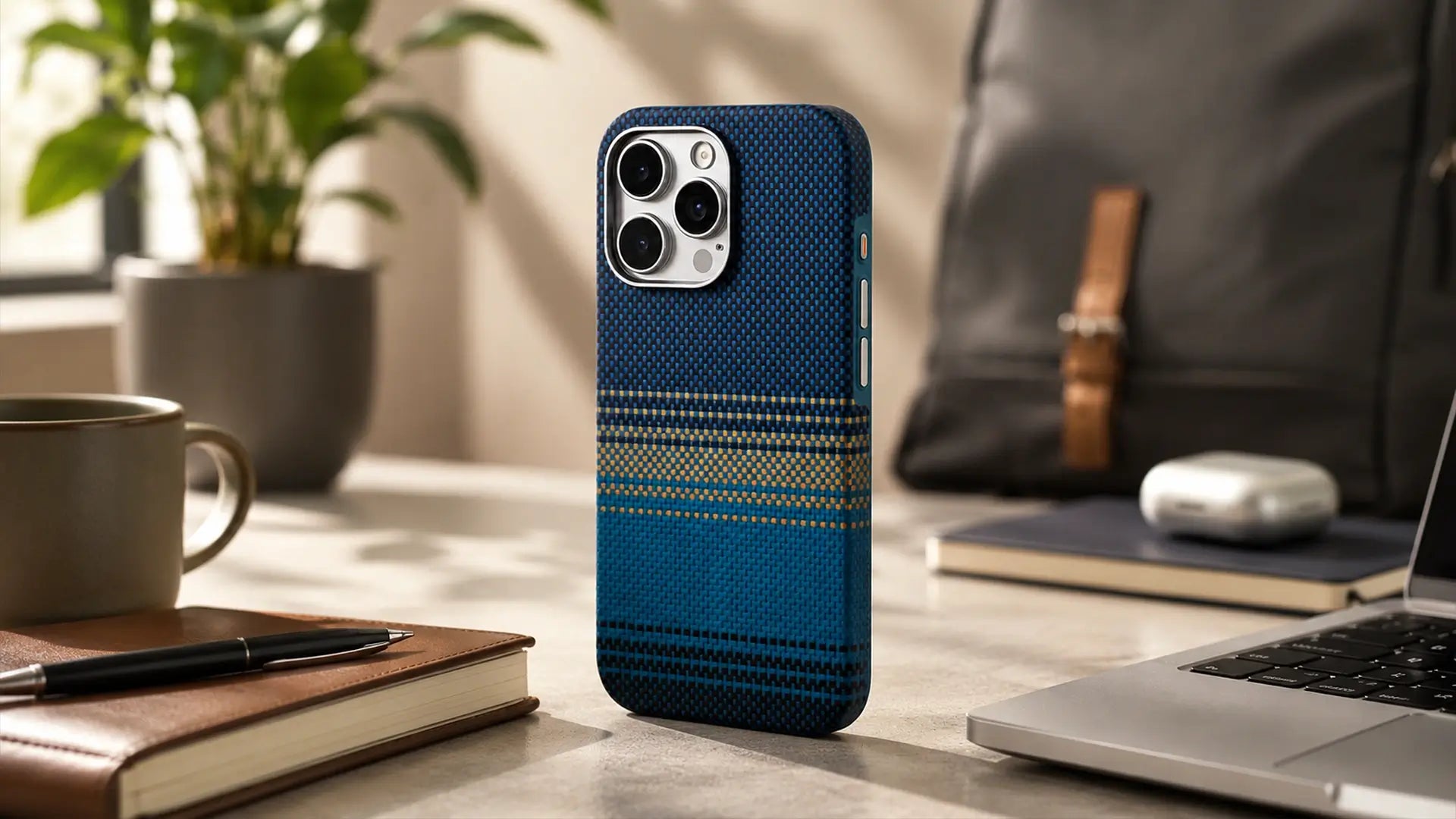
An aramid fiber phone case uses a woven synthetic fiber as its main outer material. Aramid fibers are known for low weight, strong tensile strength, and stable performance under repeated use.
In a phone case, these fibers are woven into a thin sheet. The woven structure helps spread stress across the material instead of one small point. It also allows the case to stay slim without feeling soft or loose.
Users often notice the difference during daily carry. An aramid fiber phone case feels lighter than many thick plastic or rubber cases. It also slides into a pocket easily and adds less bulk during commuting or travel. The woven surface can improve grip, although texture varies between different weave patterns.

The main aramid fiber material properties are strength, low weight, and resistance to stretching. These qualities make the material useful for a thin case back. However, the fiber layer does not determine the full level of phone protection.
Drop performance also depends on the case edges, corners, camera lip, and internal layers. A thin aramid case may handle scratches and light bumps well. It may offer less impact absorption than a thicker case with flexible sidewalls.
Understanding what an aramid fiber phone case is helps set realistic expectations. It combines lightweight handling with durable woven material, but complete protection depends on the whole case structure.
Does an Aramid Fiber Case Actually Protect Against Drops?
Yes, an aramid fiber phone case can protect against some everyday drops. However, the material alone does not determine the final level of protection.
Aramid fiber is strong and resists stretching, tearing, and surface damage. Those properties help the case maintain its shape during regular use. But drop protection also requires the case to absorb and distribute impact energy.
Flexible TPU edges often handle this job better than rigid woven material. They compress slightly when the phone hits the ground. Reinforced corners, raised edges, and internal cushioning can also spread force away from vulnerable areas.

Imagine dropping your phone while getting out of a car. A case with TPU sides and protected corners may reduce the shock reaching the frame. A very thin aramid case with limited edge coverage may offer less protection during the same fall.
Some users choose aramid cases because they value thinness, grip, and scratch resistance. Others prefer thicker cases because impact protection matters more than pocket comfort. Both choices are reasonable, but they serve different priorities.
Thin aramid cases are not equivalent to thick rugged cases. They may handle light drops and daily bumps, but results depend on height, surface, angle, and phone model. No case can guarantee protection from every fall.
Aramid Fiber Case vs Rugged Case: Which Protection Style Fits You?
The main difference is how each case balances portability and impact protection. An aramid fiber phone case stays slim and light. A rugged case adds more cushioning, thicker edges, and stronger corner coverage.
| Factor | Aramid Fiber Case | Rugged Case |
|---|---|---|
| Thickness | Slim profile with minimal added bulk | Thicker body with raised edges and reinforced corners |
| Weight | Light and comfortable for extended handling | Heavier because of added protective layers |
| Daily Carry | Fits pockets, bags, and car mounts easily | May feel bulky in tight pockets |
| Impact Protection | Suitable for light drops, scratches, and daily bumps | Better suited to harder falls and uneven surfaces |
| Best Use Cases | Office work, commuting, business travel | Outdoor work, hiking, frequent travel, active environments |
For office users and daily commuters, a slim aramid case may feel more practical. It stays comfortable during long calls and repeated pocket carry. Travelers who pack lightly may also prefer its lower weight.
A rugged case makes more sense when drops happen frequently. Flexible materials and thicker corners absorb more impact energy. Outdoor workers, hikers, and active users may value that extra cushioning.

Neither option solves every problem. Thin aramid cases may offer limited protection during severe drops. Rugged cases can feel heavy, collect dust around openings, and reduce pocket comfort.
Choose based on where you use your phone and how often drops occur. The right choice depends on daily habits, not material reputation alone.
Aramid Fiber vs Carbon Fiber Phone Case: What Is the Difference?
Aramid fiber and carbon fiber cases can look similar at first glance. Both often use dark woven patterns and slim profiles. However, their material behavior and daily handling feel different.
| Factor | Aramid Fiber Case | Carbon Fiber Case |
|---|---|---|
| Material Feel | Slightly softer and less rigid | Firmer with a harder surface feel |
| Weight | Very light for daily carrying | Lightweight, though often more rigid |
| Texture | Woven texture may feel warmer and grippier | Pattern often feels sharper and more defined |
| Flexibility | Can flex slightly without cracking easily | More rigid and less tolerant of bending |
| Daily Use | Comfortable for commuting, office work, and travel | Suits users who prefer a firm, structured feel |
During office use, an aramid fiber phone case may feel comfortable during long calls. Its lighter and slightly flexible structure can also make pocket carry easier. A carbon fiber case may feel more solid on a desk or during short handling.

Neither material is automatically better for every user. Aramid fiber may suit people who value grip, low weight, and slight flexibility. Carbon fiber may appeal to users who prefer stiffness and a harder surface.
Protection also depends on the complete case design. Edge materials, corner cushioning, camera coverage, and internal layers can matter more during drops. A thin case made from either material may protect less than a thicker case with flexible edges.
600D vs 1500D Aramid Fiber: Does Higher Denier Mean Better Protection?
Denier describes the thickness and weight of individual fibers used in the weave. In phone cases, it mainly affects texture, appearance, and handling. A higher number does not automatically mean stronger drop protection.
| Factor | 600D Aramid Fiber | 1500D Aramid Fiber |
|---|---|---|
| Weave Appearance | Finer, tighter, and more uniform | Larger, more visible weave pattern |
| Hand Feel | Smoother during extended handling | More noticeable texture under the fingers |
| Texture | Subtle and closely woven | Coarser with stronger surface definition |
| Visual Style | Clean, understated, and suited to office use | Bolder and easier to notice |
| Protection Consideration | Material remains light and stable | Thicker fibers do not guarantee better impact absorption |
Users often notice the difference while holding the phone, not during a drop. A 600D aramid fiber phone case may feel smoother during calls or pocket carry. A 1500D case may feel more textured and secure in the hand.

The aramid weave texture difference can also affect personal preference. Some users prefer a fine pattern that blends into an office setup. Others choose a larger weave because it has a stronger visual presence.
Protection depends on the complete case structure. Flexible edges, reinforced corners, raised lips, and internal cushioning influence drop performance. Therefore, the 600D vs 1500D aramid fiber choice should focus mainly on texture and appearance.
Who Should Buy an Aramid Fiber Phone Case?
An aramid fiber phone case suits users who want low weight and everyday protection. It works best when comfort, clean styling, and easy handling matter most.
Choose aramid if:
- Lightweight carry matters. The slim structure adds little bulk during commuting or travel.
- A clean design matters. The woven surface looks understated in office and business settings.
- Daily protection is enough. It can handle scratches, light bumps, and normal pocket use.
- You use your phone for long periods. Lower weight can improve comfort during calls.
- You move between different settings. It fits easily into pockets, bags, and car mounts.
Office users may appreciate the slim profile during meetings and daily desk use. Commuters often prefer cases that fit easily into tight pockets. Travelers may also value less weight when carrying several devices and accessories.
Consider another case if:
- You drop your phone frequently. A thicker case may absorb impact more effectively.
- Maximum impact protection is needed. Rugged cases usually include deeper cushioning and reinforced corners.
- You work outdoors. Rough surfaces and repeated falls may require stronger edge protection.
- You prefer substantial grip. Some thin aramid cases may feel less secure than rubberized designs.
So, are aramid fiber phone cases worth it? They are a practical choice for controlled daily use. Users facing frequent drops or harsh environments may be better served by a thicker protective case.

Common Questions About Aramid Fiber Phone Cases
Before choosing an aramid fiber phone case, it helps to separate material strength from complete case protection. These answers cover the most common buying concerns.
Are aramid fiber phone cases worth it?
They can be worth it for users who value low weight, slim handling, and scratch resistance. They suit office work, commuting, and travel, but may not replace a thicker case for frequent drops.
Do aramid fiber cases protect against drops?
They can reduce damage from light drops and everyday bumps. However, impact protection depends heavily on TPU edges, reinforced corners, raised lips, and internal cushioning.
What is the difference between an aramid fiber and carbon fiber phone case?
Aramid fiber usually feels lighter, slightly more flexible, and less rigid. Carbon fiber often feels harder and more structured, although actual protection still depends on the complete case construction.
Are thin aramid cases enough protection?
A thin aramid case may be enough for careful users with controlled daily routines. It may not suit outdoor work, frequent travel, or users who regularly drop their phones.
How does an aramid fiber case compare with a TPU case?
Aramid fiber cases usually feel thinner, firmer, and easier to carry. TPU cases often absorb impact better because the flexible material compresses during falls, though they may feel thicker or softer.
SNAP ON. PROTECT MORE.
Aramid magnetic case for 360° protection.
Share:
600D vs 1500D Aramid Fiber: Which Phone Case Weave Should You Choose?
Do Thin Cases Protect Your Phone, Screen, and Camera?