

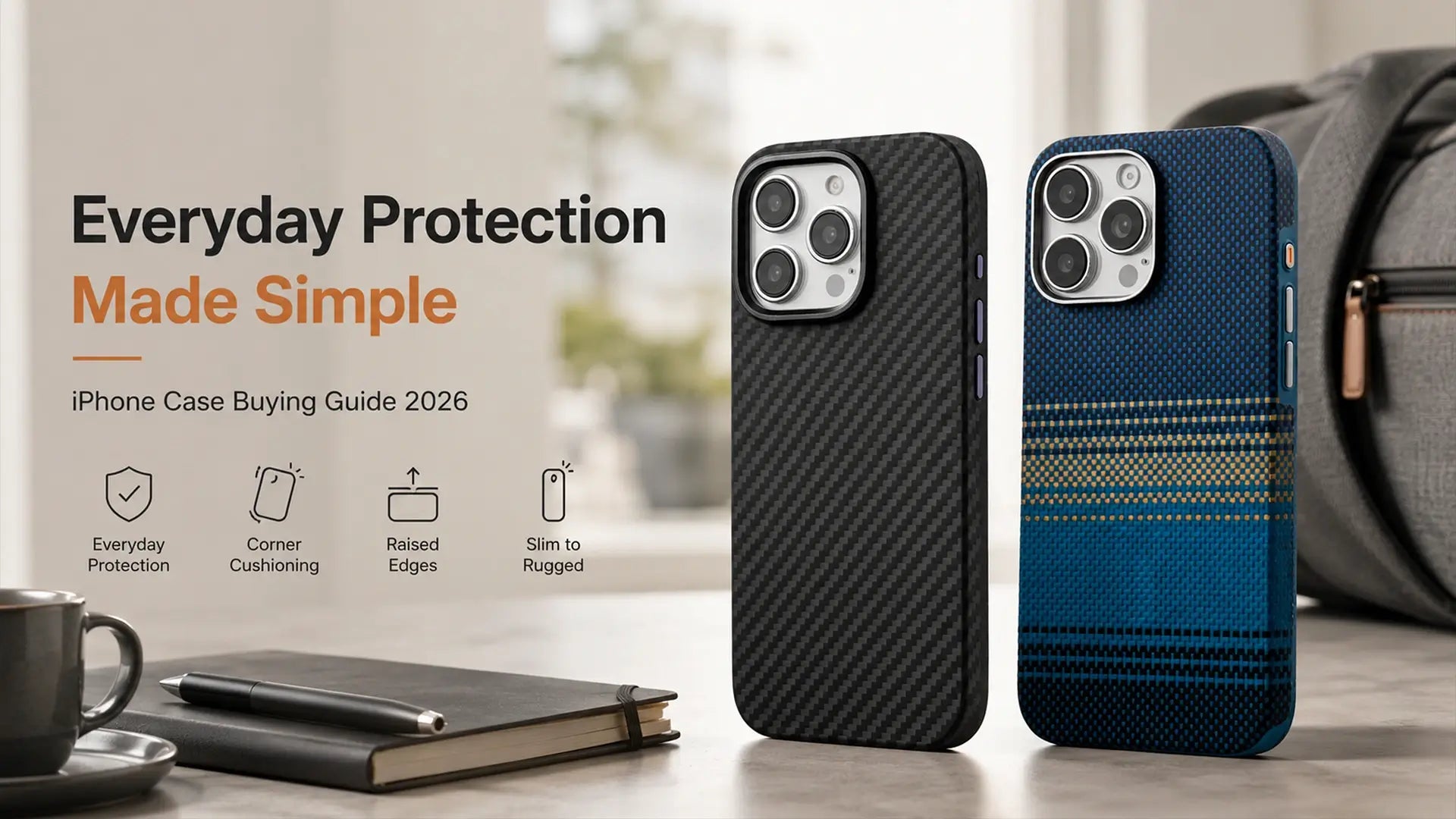
Choosing the best iPhone case for protection is about finding the right balance between impact resistance, everyday comfort, and how you actually use your phone.
A protective case should do more than add thickness. The right design combines secure grip, reinforced corners, raised screen and camera edges, and a reliable fit to reduce damage from common daily accidents.
For most users, an everyday protective iPhone case offers the best balance of protection and usability. Slim cases may work well for careful users who prioritize a lighter feel, while rugged cases provide more cushioning for higher-risk situations.
For most people, the best iPhone case for protection is a well-fitted everyday case with reinforced corners, grip, and raised edges. No case prevents all damage.
What Everyday iPhone Protection Includes
Everyday iPhone protection includes reducing slips, cushioning common drops, and limiting wear from normal handling.
Protection starts before the phone hits the ground. A case with reliable grip can reduce slips during one-handed commuting, quick photos, or use on crowded public transport. This is different from impact cushioning, which helps manage force after a drop has already happened.

Daily protection also covers several smaller risks:
- Drop impact: Flexible corners and side cushioning may reduce the force transferred during hand-height or pocket-height falls.
- Scratches and scuffs: Back and edge coverage helps protect the phone from keys, bags, desks, and car consoles.
- Screen contact: Raised screen edges can keep the display away from relatively flat tables and counters.
- Camera contact: A raised camera frame can keep the lenses from resting directly on flat, hard surfaces.
- Daily wear: A secure fit limits movement between the phone and case, which may reduce rubbing and trapped debris.
Everyday iPhone protection focuses on common risks, not extreme drops. Raised edges mainly help on flat surfaces. They cannot prevent damage when the screen or camera hits a stone, corner, or raised object.
How Protective iPhone Case Construction Works
Protective iPhone case construction depends on how the back, edges, corners, raised areas, and fit work together.
A phone often lands on a corner first. Flexible corner material can compress during impact. This helps spread force before it reaches the phone.
Case element |
What it does | Main limitation |
|---|---|---|
| Flexible corners | Cushion corner-first impacts |
Limited protection in severe drops |
| Sidewalls and edge coverage | Reduce direct contact with the phone frame |
Open areas may remain exposed |
Raised screen and camera edges |
Reduce contact with flat surfaces |
Cannot block raised objects |
Precise fit |
Keeps protective areas in position |
Loose edges reduce protection |
Backplate and inner layer |
Add structure and separation |
Results depend on material and coverage |

Overall thickness affects how much cushioning material can compress. However, back thickness alone does not determine protection. A balanced case also needs flexible corners and a secure fit.
Drop-test claims need context. Check the height, surface, angle, drop count, and pass criteria.
What to Look for in a Protective iPhone Case
1. Confirm the exact model fit
The case should match your iPhone model and camera layout. Loose edges, lifted corners, or pressure on a screen protector can reduce protection.
2. Inspect the corners and sides
Flexible corners help manage common impacts. Full edge coverage also protects the phone frame.
3. Look for raised edges
The screen lip and camera surround should sit above flat surfaces. They cannot protect against every raised object.

4. Test grip and controls
The sides should feel secure without catching heavily on pockets. Buttons and Camera Control should remain easy to use.
5. Check MagSafe compatibility
Check compatibility with the chargers, wallets, stands, grips, and car mounts you use. Look for correct alignment and secure magnetic contact.
6. Review drop-test details
Look for the test height, surface, angle, drop count, and pass criteria.
Treat terms such as “shockproof” or “military-grade” as claims, not proof. Look for clear test conditions and limitations.
Slim vs. Rugged iPhone Cases: Which Protection Level Fits You?
| Case type | Best for | Protection | Main trade-off |
|---|---|---|---|
| Barely-there | Careful desk users | Basic scratch and surface protection |
Very little corner cushioning |
| Slim protective | Office users and minimalists | Light-drop and daily-wear protection |
Less impact cushioning |
| Everyday protective | Commuters and travelers | Grip, corner cushioning, and raised edges |
Moderate added bulk |
| Rugged | Frequent droppers and outdoor users | Greater corner and edge cushioning |
Heavier and wider |

For most commuters and office users, an everyday protective case gives the best balance of grip, cushioning, edge coverage, and pocket comfort.
A rugged iPhone case usually provides more impact cushioning. A slim protective iPhone case is easier to carry and use with one hand.
Thickness alone does not prove protection. Fit, grip, corner structure, and edge coverage also matter.
FAQ About iPhone Case Protection
These common questions explain how grip, cushioning, raised edges, and case thickness affect daily protection.
What iPhone case has the best drop protection?
A reinforced or rugged case usually provides the most drop cushioning. Look for flexible corners, full edge coverage, a secure fit, and clear drop-test details. No case can guarantee protection in every fall because results depend on the height, angle, and landing surface.
Do slim iPhone cases protect against drops?
Yes, some slim cases can reduce damage from short everyday drops. Their thinner corners have less room to compress, so they may perform poorly during harder or repeated impacts.
Are raised edges enough to protect an iPhone screen and camera?
No, raised edges are only one part of screen and camera protection. They reduce contact with flat desks and counters but cannot stop glass from striking stones, corners, or uneven surfaces.
Is a rugged iPhone case worth the extra bulk?
Yes, it may be worthwhile for frequent droppers, parents, travelers, or people working around hard surfaces. Careful desk users may find the added width, weight, and reduced pocket comfort unnecessary.
Do camera lens protectors affect iPhone photo quality?
They can, depending on their material, fit, cleanliness, and condition. Scratches, trapped dust, reflections, or glare may reduce image clarity, especially at night or around bright lights.
Final Verdict: Choose Protection You Will Actually Use
The best iPhone case for protection is not always the thickest one. It is the case that matches your daily risks and remains comfortable enough to use every day.

Most office users and commuters need an everyday protective case. Look for secure grip, flexible corners, raised edges, and precise fit. Also check that the case works with the MagSafe accessories you use. Choose a rugged case when repeated drops or hard surfaces are common.
No case guarantees a damage-free phone. Choose the least bulky case that still addresses your most likely risks.
SNAP ON. PROTECT MORE.
Aramid magnetic case for 360° protection.
Share:
Do Thin Cases Protect Your Phone, Screen, and Camera?
Does a MagSafe Case Affect Wireless Charging?