

- What Does Denier (D) Mean in Aramid Fiber?
- 600D Aramid Fiber: Smoother Texture for Minimal Daily Carry
- 1500D Aramid Fiber: More Visible Texture and Technical Feel
- 600D vs 1500D Aramid Fiber: Real-World Comparison
- Does 1500D Aramid Fiber Provide Better Protection?
- Which Aramid Fiber Case Should You Choose?
- Still Unsure About 600D vs 1500D?
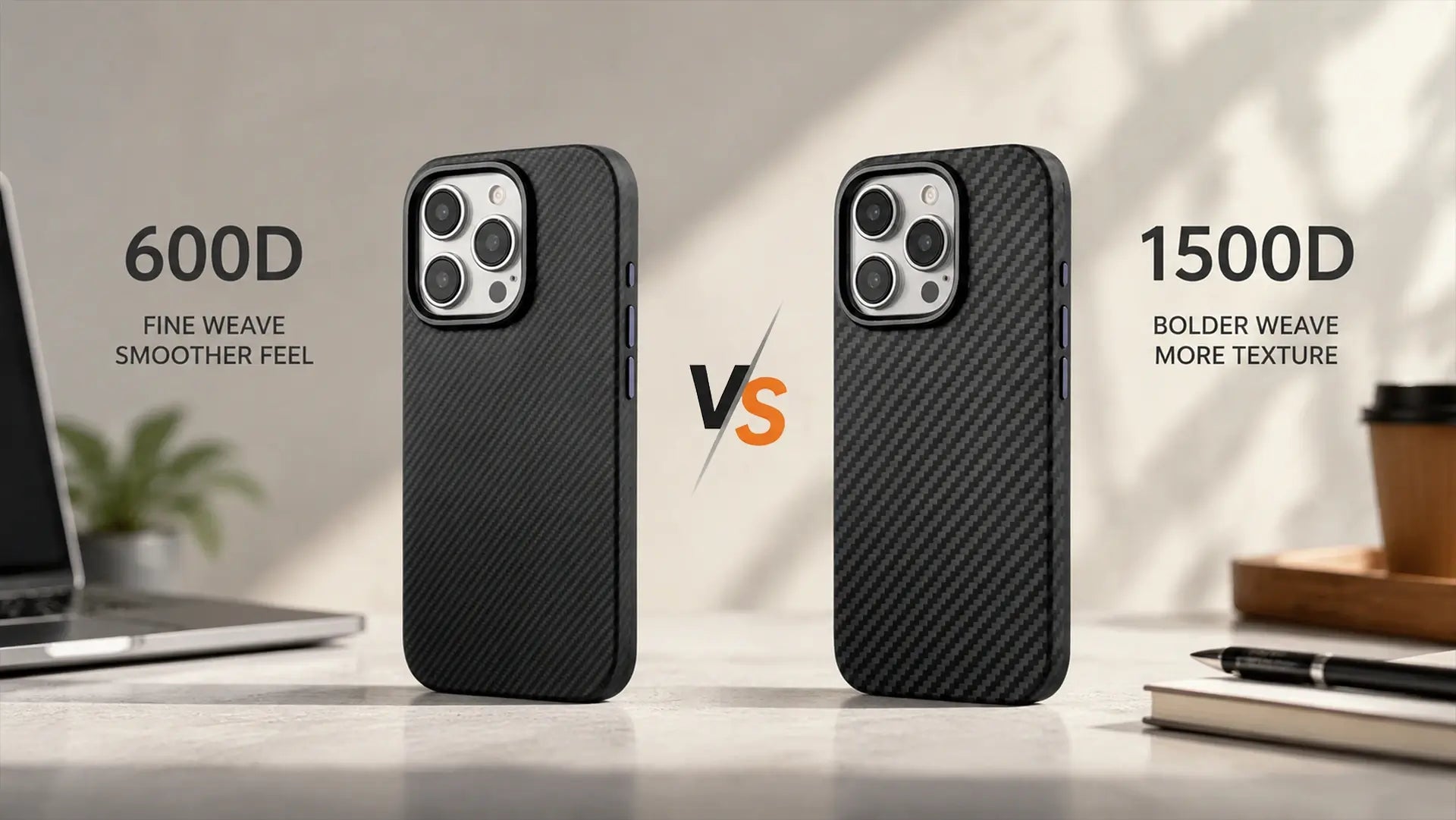
When comparing 600D vs 1500D aramid fiber, the main difference is the weave texture and surface appearance. 600D aramid fiber uses a finer weave pattern, creating a smoother and more uniform look. 1500D aramid fiber has a larger weave structure, giving the case a more visible texture.
The difference comes from Denier, a measurement related to fiber thickness. A higher Denier number usually means thicker individual fibers, which can change how the aramid fiber weave looks and feels in daily use.

For example, someone who carries a phone in a pocket or uses it at an office desk may prefer the cleaner feel of 600D. The finer pattern feels more subtle during regular handling. Travelers or users who like a more noticeable material texture may prefer the stronger visual character of 1500D.
| Factor | 600D Aramid Fiber | 1500D Aramid Fiber |
|---|---|---|
| Weave Pattern | Finer and smoother | Larger and more visible |
| Surface Feel | More uniform texture | More noticeable texture |
| Appearance | Cleaner, understated look | Stronger woven pattern |
However, higher Denier does not automatically mean better protection. The overall performance of an aramid fiber phone case depends on the complete case construction, including the frame, edges, and impact protection design.
What Does Denier (D) Mean in Aramid Fiber?
Denier (D) is a measurement used to describe fiber thickness. In aramid fiber materials, numbers like 600D and 1500D show differences in the fiber structure and weave appearance.
A lower Denier number usually uses finer fibers, creating a tighter and smoother weave pattern. A higher Denier number generally uses thicker fibers, which creates a larger and more visible texture. This is why 600D vs 1500D aramid fiber cases can look and feel different even when using the same material type.

When holding an aramid fiber phone case, these differences can be noticed through the surface texture. A 600D case often feels more subtle and uniform in daily handling. A 1500D case usually has a more noticeable woven pattern that some users prefer for its stronger visual texture.
For everyday use, such as carrying a phone in a pocket, using it at a desk, or commuting, Denier mainly changes the material feel and appearance. It does not directly decide whether a case is more protective.
The final protection level depends on the complete case structure, including edge coverage, frame design, and impact protection features.
600D Aramid Fiber: Sleek & Subtle
A 600D aramid fiber case is known for its finer weave structure and smoother surface appearance. Compared with larger weave patterns, 600D uses thinner fibers that create smaller and more uniform patterns across the material.
The finer aramid weave changes how the case looks and feels in daily use. The surface appears cleaner, with less noticeable texture when viewed from different angles. When holding the phone, many users notice a more consistent and subtle touch compared with cases that have a larger weave pattern.

Understated Style for Business & Office
For daily situations like carrying a phone in a pocket, working at an office desk, or attending business meetings, a 600D aramid fiber case fits users who prefer a simple material style. The smaller weave pattern keeps the phone case appearance more understated while maintaining the recognizable aramid fiber look.
However, 600D is not automatically better than other aramid options. Some users prefer a stronger woven appearance with more visible texture, especially when they want the material pattern to stand out. The choice between 600D vs 1500D aramid fiber mainly depends on personal preference for texture, appearance, and handling feel.
1500D Aramid Fiber: Bold & Textured
A 1500D aramid fiber case has a larger and more noticeable weave pattern compared with finer aramid materials. The thicker fiber structure creates a surface texture that is easier to see and feel when holding the phone.
The difference comes from fiber thickness. In the 600D vs 1500D aramid fiber comparison, 1500D uses thicker individual fibers that form larger weave patterns. This creates a more defined aramid fiber texture with a stronger visual presence.

Distinctive Look for Daily Commuting
For users who commute, travel frequently, or often handle their phone with one hand, the visible texture can make the material feel more distinctive. Some people prefer the stronger woven appearance because it gives the phone case a more technical style during everyday use.
However, a larger weave pattern does not automatically mean better protection. The Denier value mainly changes the appearance and surface feel of the material. Overall case performance still depends on factors such as the case structure, edge coverage, and impact protection design.
A 1500D aramid fiber case is a good match for users who enjoy a more noticeable material texture. Those who prefer a cleaner and smoother appearance may find a finer weave more suitable.
600D vs 1500D Aramid Fiber: Real-World Comparison
When comparing 600D vs 1500D aramid fiber, the main differences appear in the weave texture, visual style, and handling experience. Both use aramid fiber material, but their surface patterns create different impressions during everyday use.
| Factor | 600D Aramid Fiber | 1500D Aramid Fiber |
|---|---|---|
| Appearance | Fine and uniform weave pattern | Larger and more visible weave pattern |
| Texture Feel | Smoother and more subtle surface | More noticeable woven texture |
| Daily Handling | Clean feel for regular pocket carry | Stronger tactile feedback in hand |
| Style Preference | Minimal and understated look | More technical and distinctive appearance |
| Common Use | Office work, meetings, daily carry | Commuting, travel, users who like visible texture |
For office use or business settings, many users may prefer the cleaner appearance of 600D. The finer weave creates a more consistent surface that feels simple during daily handling. A 1500D aramid fiber case may appeal more to users who enjoy a stronger material pattern while commuting or traveling.
The aramid fiber weave texture difference is mainly about appearance and touch. A higher Denier value does not automatically mean better durability or protection. The final performance of a 600D vs 1500D phone case depends on the complete case construction, including the frame, edges, and protection structure.
Does 1500D Aramid Fiber Provide Better Protection?
When comparing 600D vs 1500D durability, the difference is not simply about choosing a higher number. A phone case protects through multiple parts working together. The frame structure, TPU edges, corner reinforcement, raised camera edge, and screen protection design all influence how the case handles daily impacts.
For example, a phone dropped from a desk or knocked against a surface during commuting may rely more on the case edges and corners than the aramid fiber weave itself. The same applies when carrying a phone in a bag or placing it on different surfaces throughout the day.

A 600D vs 1500D aramid fiber choice should mainly depend on the texture and appearance you prefer. A larger 1500D weave may feel more noticeable in hand, while 600D offers a finer surface feel. Neither option guarantees better protection by Denier alone. The overall case construction remains the key factor for aramid fiber phone case protection.
Which Aramid Fiber Case Should You Choose?
Choosing between 600D vs 1500D aramid fiber depends more on your daily habits and style preference than the Denier number itself. Both options use aramid fiber material, but they create different surface experiences.
Choose 600D aramid fiber if you prefer:
- A cleaner and more minimal appearance
- A smoother surface feel during daily handling
- A lightweight and subtle phone case style
- Office use, meetings, and professional environments
Choose 1500D aramid fiber if you prefer:
- A more visible aramid fiber texture
- A stronger woven pattern that stands out
- A more technical material appearance
- A noticeable surface feel when holding the phone

For example, someone who mainly carries a phone between an office desk, meetings, and daily errands may enjoy the finer feel of 600D. A user who travels often or prefers a more defined material texture may like the character of 1500D.
There is no universal winner between 600D and 1500D aramid fiber. They represent different design choices based on appearance, texture, and personal preference. The best aramid fiber phone case is the one that matches how you use and handle your phone every day.
Still Unsure About 600D vs 1500D?
Does a higher Denier number mean better drop protection, or is it just about how the case feels in your hand? Before you make your final choice, check out our quick FAQ guide below where we break down the real-world differences in texture, thickness, and everyday performance.
Is 1500D aramid fiber stronger than 600D?
Not necessarily. 1500D uses thicker fibers and creates a larger weave pattern, but Denier alone does not determine phone case protection. The overall case structure, including edges and impact protection design, matters more.
What is the difference between 600D and 1500D aramid fiber?
The main difference is the weave texture and appearance. 600D uses finer fibers for a smoother and more uniform surface, while 1500D creates a more visible woven pattern with stronger texture.
Which is better for a phone case, 600D or 1500D?
Neither option is universally better. A 600D case may suit users who prefer a cleaner feel for office use, while 1500D may appeal to users who like a more noticeable material texture during daily handling.
Does higher Denier mean better protection?
No. Higher Denier mainly changes fiber thickness and weave appearance. Protection depends on the complete case construction and how it handles situations like drops, commuting, and everyday impacts.
Is a 600D aramid fiber case thinner than a 1500D case?
Not always. The Denier value describes the fiber structure, not the total case thickness. The final thickness depends on the case design, layers, and other materials used.
SNAP ON. PROTECT MORE.
Aramid magnetic case for 360° protection.
Share:
Aramid vs Carbon Fiber Phone Cases: Which Material Fits Your Everyday Use?
Are Aramid Fiber Phone Cases Worth It? A Practical Guide to Durability and Protection