

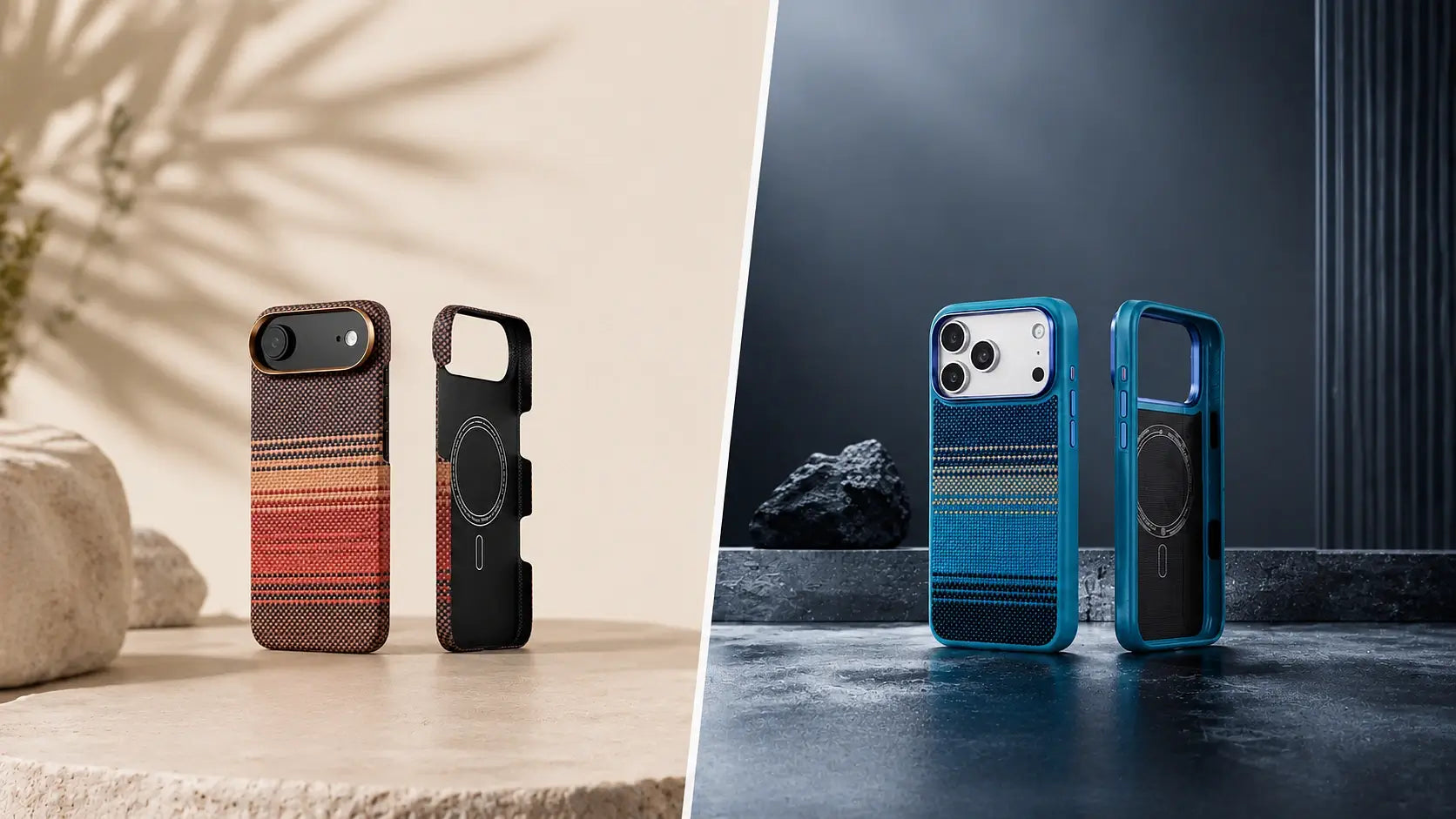
What Is a Slim Phone Case?
A slim phone case is often chosen for pocket carry, commuting, or desk use because it keeps the phone lighter, easier to hold, and less noticeable throughout daily handling. It offers a balance between clean design and basic protection for everyday use.
Most slim designs use TPU or polycarbonate (PC) in thinner structures, which defines many phone case protection types in this category. This reduces thickness and creates a lightweight phone case with better portability and one-handed comfort, but also less space for impact absorption. As a result, corner protection in drop scenarios is more limited, making it better suited for everyday scratches and light bumps rather than heavy impacts.

What Is a Rugged Phone Case?
A rugged phone case is built for commuting drops, outdoor use, and situations where the phone is exposed to pressure inside bags or on rough surfaces. A rugged phone case typically uses a multi-layer structure that combines a hard outer shell with shock-absorbing inner materials, improving impact distribution and corner protection for better drop protection in daily high-risk use.
This added structure increases durability and protection performance, but it also brings trade-offs such as more bulk, higher weight, and reduced pocket comfort. As a result, while a rugged phone case is stronger in protection, it is less portable than a slim phone case for everyday carry.

Slim vs Rugged Phone Case — Key Differences
The comparison between a slim vs rugged phone case depends on daily carry needs versus high-risk environments such as commuting, outdoor use, or heavy device handling. A slim phone case prioritizes portability and comfort, while a rugged phone case focuses on reinforced protection through thicker materials and multi-layer construction. This creates a clear lightweight vs heavy duty phone case comparison where usability and protection are balanced differently depending on use case.
| Aspect | Slim Phone Case |
Rugged Phone Case |
|---|---|---|
| Protection | Basic scratch and light bump protection | Enhanced drop protection with reinforced corners |
| Weight | Lightweight | Heavier due to multi-layer structure |
| Grip | Smooth to moderate grip depending on material | Stronger grip with textured or reinforced surfaces |
| Portability | High, pocket-friendly daily carry | Lower, bulkier in pocket or bag |
| Durability | Moderate, suitable for everyday use | High, suitable for impact-heavy environments |
| Best Use Case | Office, commuting, minimal daily carry | Outdoor, travel, high-drop-risk situations |
Neither slim vs rugged phone case type is universally better, as the choice depends on whether the priority is portability or protection strength.
Real-World Usage Scenarios
- Desk drops (phone case for daily use): On desks, phones often slip during charging or cable handling, where even small drops can chip corners or scratch edges if protection is limited. A basic case helps reduce surface damage but impact protection varies by material.
- Car exits (best phone case for commuting): Getting in and out of cars increases drop risk due to seat edges, pockets, and sudden hand movement. This is where reinforced corners and better grip become more important for preventing accidental slips.
- Pocket slips (phone case for daily use): During walking or sitting, phones can slide out of shallow pockets, especially with smooth cases. Grip level and case fit directly affect how often these slips happen.
- Travel handling (phone case for travel use): In luggage, backpacks, or airport movement, phones experience pressure and mixed impacts. No single case fits all environments, so protection needs vary between slim everyday carry and more rugged setups.

Protection vs Comfort Trade-Off Explained
Protection and comfort in a phone case depend on thickness and structure. In real-world use like pocket carry, desk use, and accidental drops, thicker materials improve impact absorption, while reinforced layers reduce corner damage risk. This is why rugged phone case pros and cons often compare stronger protection with lower daily convenience.
- More protection → better drop resistance, less comfort in daily carry
- Thinner cases → easier pocket use, weaker impact protection
- Reinforced structure → higher durability, but adds bulk and weight
Many users asking do slim phone cases protect enough are evaluating this trade-off. No case provides both maximum protection and maximum comfort. The choice depends on daily usage needs.

Which Phone Case Should You Choose?
If you are deciding which phone case should I choose, the right option depends on how and where you use your phone in real life. Office use, commuting, travel, and outdoor activity all require different levels of protection and comfort, so the best phone case for iPhone is always based on user behavior rather than a single universal standard.
- IF you are a minimal user working in office environments → THEN choose a slim phone case for lighter feel, pocket comfort, and basic scratch protection during daily handling.
- IF you are a commuter using public transport or moving frequently → THEN choose a balanced case with reinforced corners for better drop protection and grip.
- IF you are a heavy-use or outdoor user → THEN choose a rugged phone case for stronger shock absorption in travel, outdoor work, or frequent accidental drops.
No single option fits all users, so the final choice depends on your daily environment and risk level.

Are There Better Middle Options?
Yes, there are middle options designed for users who switch between office work, commuting, travel, and light outdoor use. A strong example is a hybrid phone case slim rugged design using a Kevlar backplate with TPU edge protection, combining structure and flexibility to deliver balanced phone case protection without the full bulk of a rugged case.
This hybrid approach uses TPU cushioning around the frame for impact absorption, while the Kevlar (aramid fiber) back adds structural rigidity and everyday scratch resistance. It is designed for users who need more protection than a slim case but still want a clean, business-ready profile.
- Balanced protection → improved corner safety without full rugged bulk
- Hybrid structure → Kevlar backplate + TPU edge reinforcement
- Daily flexibility → suitable for office, commute, and travel use
However, this is still a compromise. It does not match full rugged drop protection, but it is significantly more practical than heavy-duty cases for everyday carry.
Slim vs Rugged Phone Case FAQs
Still deciding between a slim and rugged phone case? These answers cover everyday protection, drop resistance, MagSafe compatibility, and aramid fiber cases to help you choose based on how you use your phone.
Do slim cases protect phones?
Yes, slim cases can protect against scratches, scuffs, and small daily bumps. They help with desk drops and pocket wear. But slim cases lose to concrete when the drop is hard enough.
How much drop protection do I need?
Most users need everyday protection for pockets, desks, bags, and short accidental drops. Choose more protection if you work outdoors or drop your phone often. If your phone often hits concrete, a rugged case is the safer choice.
Do rugged cases affect MagSafe?
Yes, rugged cases can affect MagSafe strength. Thick materials increase the distance between the magnets and the accessory. Without strong built-in magnets, rugged cases can weaken car mounts and wireless charging alignment.
Are aramid fiber cases worth it?
Aramid fiber cases are worth considering if you want a slim, durable, and business-ready case. They resist daily scratches better than basic plastic shells and avoid clear-case yellowing. They are not the right choice for heavy drops or rough jobsite use.
SNAP ON. PROTECT MORE.
Aramid magnetic case for 360° protection.
Share:
Best Phone Case Materials: TPU vs PC vs Silicone vs Aramid
iPhone 18 vs iPhone 17 Pro: Should You Upgrade or Wait?